Oct 1, 2026Sourcing Guide
How to Develop a Knit Vest for Private Label Production
A knit vest development guide for private label brands: silhouette, layering, knit structure, yarn, gauge, neckline details and what to confirm before sampling.
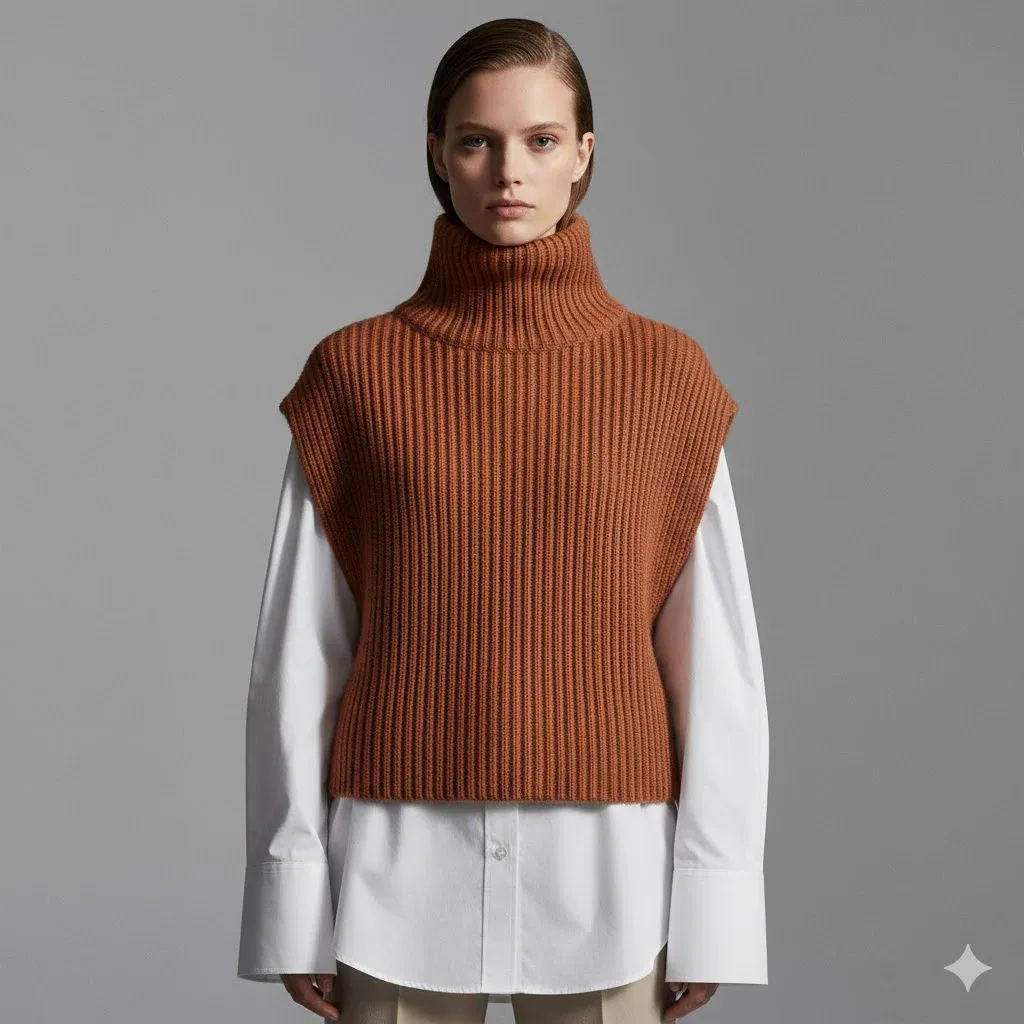
A buyer sends a reference image of a knit vest and says: "I want this vest." But a photo alone cannot tell the factory the yarn type, knit structure, gauge, garment weight, rib tension, armhole depth, or how the vest is meant to fit. These details determine whether the sample looks and feels like the reference — or becomes a completely different garment.
This guide explains what to confirm before developing a knit vest for private label production.
Start with the Silhouette, Not the Trend
Before discussing yarn or structure, define the silhouette. A fitted vest, a regular-fit vest, a relaxed vest, an oversized vest, a cropped vest, and a longline vest each require different body width, chest ease, body length, shoulder width, and armhole depth.
"Oversized" is not a complete specification. It tells the factory the direction but not the actual measurements. Confirm the body length, chest ease, shoulder width, armhole depth, and how loose or close the vest should fit relative to the body.
Decide Whether the Vest Is Meant for Layering
This is one of the most important decisions in knit vest development. A vest worn alone has different fitting requirements from a vest worn over a T-shirt, shirt, or blouse.
If the vest is designed for layering:
- Armhole needs to be larger to allow movement over another garment
- Chest ease must account for the thickness of the base layer
- Shoulder width may need adjustment to sit correctly over a shirt collar
- Neckline depth and width change depending on what is worn underneath
- Body width affects how the vest hangs and whether it bunches at the waist
Tell the factory how the vest is meant to be worn — alone or layered — and over what type of garment. This determines the fit specification before any yarn or structure is discussed.
Knit Structure Changes the Look More Than a Trend Name
The knit structure determines the visual effect, stretch, weight, and openness of the fabric. Common structures used in knit vests:
Jersey knit — smooth surface, moderate stretch, clean appearance. Suits fitted and minimal designs.
Rib knit — vertical lines, high stretch and recovery. Suits close-fitting vests and waistcoat-style designs.
Cable knit — raised texture, lower stretch, heavier appearance. Suits traditional and oversized designs.
Waffle / textured knit — three-dimensional surface, moderate stretch. Adds visual interest without additional printing or embroidery.
Open knit — breathable, lighter, more transparent. Suits layering pieces and transitional seasons. Requires confirmation on opacity and whether an inner layer is needed.
Mixed structure — combines two or more knit structures in one garment. Adds visual complexity but requires more sampling to align the different structures.
Tell the factory which structure you are targeting, or send a reference and let them identify it. Do not leave the structure decision entirely to the factory — it changes the look more than any color or trend direction.
Yarn Choice Determines More Than Softness
Yarn affects surface appearance, warmth, weight, drape, stitch definition, pilling tendency, and cost. The same vest design knitted in two different yarns will look and feel like two different products.
For example, the same cable vest pattern knitted in a fine merino blend produces a refined, lightweight result. The same pattern in a thick cotton-acrylic blend produces a chunkier, more casual garment with less stitch definition.
Before confirming the yarn, describe the properties that matter for your product: soft or structured, warm or breathable, defined stitch or flat surface, lightweight or heavyweight. If you have a reference garment whose yarn you like, send it for comparison.
Gauge and Stitch Density Affect the Final Shape
Gauge refers to the number of stitches and rows per unit of measurement. It directly affects the fabric's openness, weight, stretch, drape, and shape retention.
A tighter gauge produces a denser, more structured fabric with less openness. A looser gauge produces a lighter, more open fabric that drapes differently and may require an inner layer for opacity.
You do not need to know the exact gauge number to start development. But you should communicate the density and openness you expect from the fabric, and confirm it on the physical sample. If the sample feels too open or too dense compared to your reference, tell the factory — this is a gauge issue, not a yarn issue.
Neckline, Rib and Armhole Details Need Their Own Specification
These details are small on a spec sheet but directly affect how "premium" the vest looks and how well it fits:
- V-neck depth — measured from the shoulder seam to the lowest point of the V
- Crew neck width — the width of the neck opening at the shoulder line
- Rib width — the width of the rib at the neckline, armhole, and hem
- Rib tension — how tight or loose the rib feels; affects how the neckline and cuffs hold their shape
- Armhole finishing — whether the armhole is finished with rib, binding, or left raw
- Shoulder edge — whether the shoulder seam is visible, covered, or joined without a seam
- Hem rib — width, tension, and whether the hem is straight or curved
Confirm these details on the sample. If the neckline sits too wide, the rib is too loose, or the armhole gapes, tell the factory specifically — these are correctable in the next sample round.
Reference Photos Are Useful, but Measurements Still Matter
A reference photo communicates style, color, texture, and overall impression. It does not communicate actual measurements, fit, or how the garment sits on the body.
If you only have a photo, send it and describe how you want the vest to fit. Before bulk production, a size chart with actual measurements must be confirmed. At minimum, confirm body length, chest width, shoulder width, armhole depth, neckline width and depth, and rib dimensions.
If you have a reference garment whose fit you like, send it. The factory can measure it and match the fit far more accurately than from a photo.
What to Check in the First Sample
When you receive the first sample, check the following before providing feedback:
- Overall silhouette — does it match the intended fit?
- Shoulder width and seam placement
- Armhole size and comfort
- Neckline depth and width
- Body length
- Rib recovery — does the rib return to shape after stretching?
- Knit density — is the fabric too open or too dense?
- Yarn hand feel
- Fabric weight
- Layering comfort — if designed for layering, does it fit over the intended base garment?
- Symmetry — left/right balance of the neckline, armholes, and hem
Provide specific feedback on each point rather than a general comment. "The fit is off" does not help the factory correct the sample. "The armhole is 2 cm too deep and the neckline is too wide by 1 cm" does.
MOQ Depends on Yarn, Color and Construction
Minimum order quantities for knit vests depend on several factors:
- Yarn availability and whether the yarn is in stock or needs to be sourced
- Stock color versus custom color
- Yarn mill minimum for the specific yarn
- Number of colors in the order
- Knit structure and complexity
- Size breakdown
MOQ is confirmed based on the yarn, color, construction and size breakdown. If your quantity does not match the yarn minimum or color requirement, tell the factory and they can suggest alternatives.
What to Send Us for a Knit Vest Development Review
If you are developing a knit vest under your own label, send us:
- Reference photos
- Tech pack if available
- Target fit (fitted / regular / relaxed / oversized)
- Body length and chest width if known
- Yarn preference if known
- Knit texture or structure direction
- Target weight or hand feel
- Colors and color quantity
- Size range
- Quantity per style
- Labels and packaging requirements
- Target market
If you do not have a complete tech pack, send the reference image and describe the fit direction. We can assess the construction, yarn, and structure before sampling begins.
Explore More Knitwear Styles