Oct 3, 2026Sourcing Guide
How to Develop a Private Label Yoga Wear Collection in China
Learn how to develop a private label yoga wear collection in China, from product planning and fabric selection to sampling, customization, quality control and bulk production.
Author: Connor Ma, Founder of SML INTIMATE
Published by: SML INTIMATE
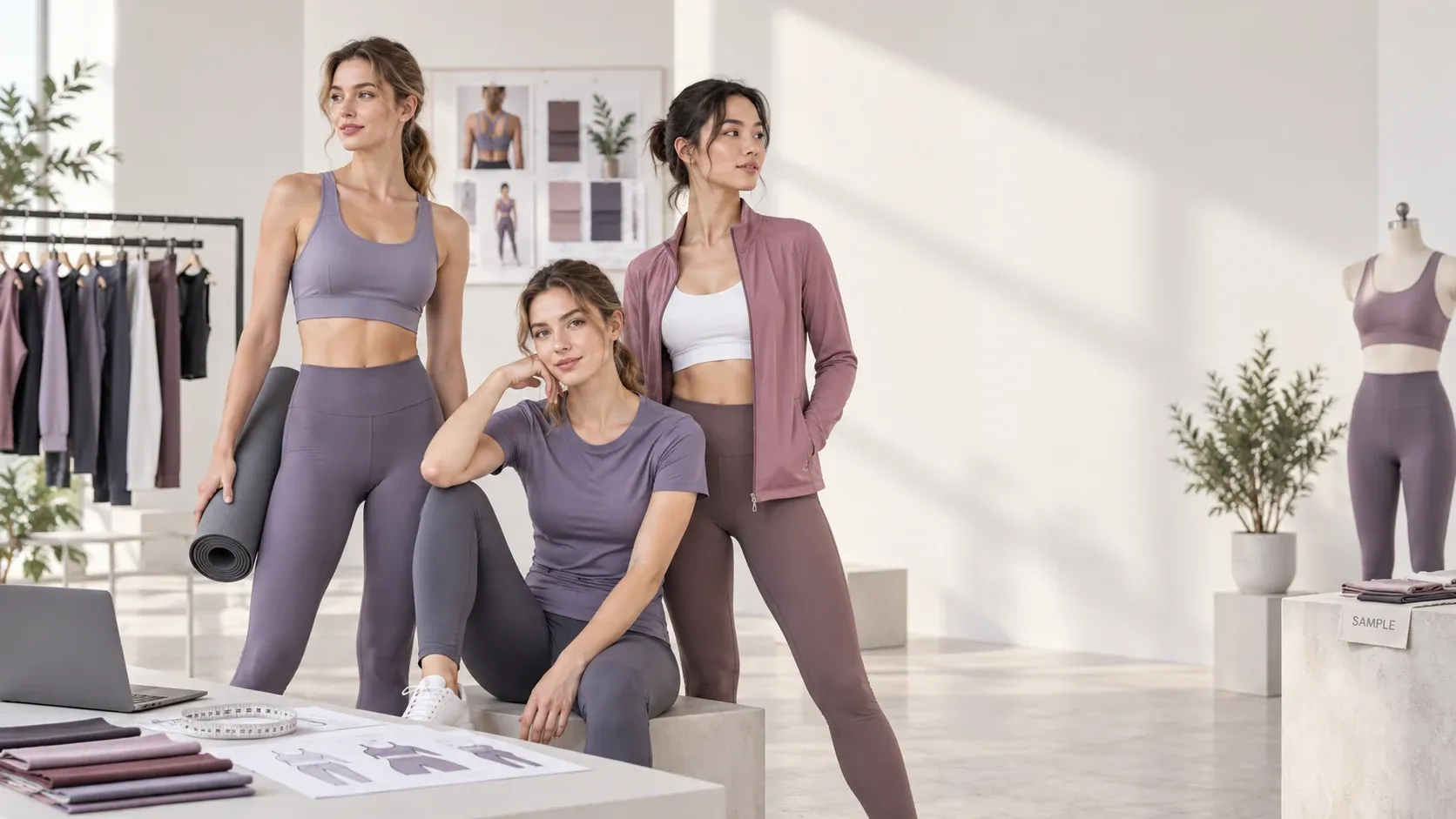
Launching a private label yoga wear collection involves more than selecting attractive styles. For brands and apparel buyers, fabric, fit, garment construction, customization, sampling and production all need to work together before a design is ready for bulk manufacturing.
A structured development process helps reduce unnecessary sample revisions, improves communication with the manufacturer and makes it easier to build a consistent activewear collection rather than a group of unrelated products.
This guide explains how brands can move from an initial yoga wear concept to a production-ready collection when working with an apparel manufacturer in China.
1. Define the Product Structure of Your Yoga Wear Collection
Before discussing fabrics, sampling or pricing, first decide what the collection actually needs to contain.
A yoga and activewear range may include:
- Sports bras
- Yoga tops
- Leggings and activewear pants
- Tennis and active skirts
- Yoga jackets
- Tank tops
- Shorts
- Long-sleeve training tops
- Matching activewear sets
A new brand does not necessarily need to launch every category at once. A smaller, focused first collection is often easier to develop because fabrics, colors, fit standards and branding can be shared across several related styles.
For example, a brand may begin with a sports bra, one legging style and several coordinated tops. Jackets, skirts, shorts and seasonal activewear can then be added after the core fabric and fit direction has been confirmed.
Buyers can explore our Yoga & Activewear collection to review current sports bras, yoga tops, leggings, active skirts and jackets available as references for OEM, ODM and private label development.
2. Choose Fabric According to the Product, Not Only the Price
Fabric is one of the most important decisions in activewear development.
Instead of asking only for the lowest fabric price, buyers should define what the garment is expected to do and how it should feel when worn.
Stretch and Recovery
Yoga leggings, fitted tops and sports bras usually require sufficient stretch for movement.
Recovery is equally important. A fabric that stretches easily but does not recover properly may lose its intended shape after repeated wear.
Fabric Weight
GSM should be selected according to the garment rather than applied uniformly across an entire collection.
A sports bra, lightweight top, legging and fitted jacket may require different fabric weights even when similar fiber compositions are used.
Hand Feel
Brands may prefer a smooth hand feel, soft brushed surface, cool touch or more compact technical feel depending on their target customer and price positioning.
These requirements should be communicated during material development and confirmed through physical samples.
Opacity
Opacity can be particularly important for leggings and other fitted bottoms.
However, it should not be assumed from fiber composition alone. Fabric weight, color, stretch and construction can all affect the result.
Color
Dark, light and saturated colors may perform differently even when the same base fabric is used.
Private label buyers should therefore approve colors against agreed standards or physical samples rather than relying only on descriptions such as “pink,” “blue” or “gray.”
For brands that have not yet finalized their material, our Fabric Sourcing service explains how fabrics can be selected according to design direction, performance requirements, budget and production needs.
3. Define Fit, Sizing and Construction Before Sampling
Activewear is highly sensitive to fit.
Small differences in body length, waistband height, neckline depth, strap position, sleeve length or leg opening can significantly change the appearance and wearing experience of the finished garment.
Before sampling, buyers should define as much as possible about:
- Size range
- Garment measurements
- Intended fit
- Body length
- Waistband height
- Rise and inseam
- Neckline
- Strap construction
- Sleeve length
- Pocket position
- Zipper construction
- Panel placement
- Lining requirements
- Stitching details
Brands that already have their own measurements or grading requirements can review our Size & Fit Guide for more information about custom sizing and production based on buyer-provided specifications.
Reference photographs are useful, but photographs alone cannot communicate every measurement or construction requirement.
When preparing the first sample, buyers should clearly identify which dimensions and construction details are fixed requirements and which elements may still be adjusted during development.
4. Pay Attention to Activewear-Specific Construction Details
Two activewear garments can appear similar in a general product photograph while requiring very different patterns, construction methods and fit specifications.
Sports Bras
For sports bras, buyers should confirm neckline shape, strap width, strap configuration, back construction, under-bust structure, lining requirements, padding requirements and seam placement.
The Racerback Sports Bra represents a more conventional racerback construction with wider shoulder straps.
For brands looking for a more distinctive neckline and open-back direction, the Halter Wrap Sports Bra provides another construction reference.
Padding and support requirements should always be confirmed for the individual design rather than assumed from the product category.
Leggings and Activewear Pants
For leggings, buyers should define waistband height and shape, front and back rise, crotch construction, seam placement, pocket requirements, leg length, leg opening and overall fit.
If pockets are required, their location and usable dimensions should be specified in the technical requirements rather than added as an assumption during production.
Yoga Tops
Yoga tops can vary substantially in fit, neckline, construction and styling.
A simple fitted top such as the Fitted Short Sleeve Yoga T-Shirt provides a reference for a clean short-sleeve activewear silhouette.
More detailed constructions may involve mesh or contrast panels. The Mesh Panel Yoga T-Shirt provides a reference for incorporating mesh into specific garment areas.
Brands looking for a more structured short-sleeve style can also review the Full-Zip Short Sleeve Yoga Top, where zipper construction, collar shape and body seams become additional development points.
Yoga Jackets
Fitted activewear jackets often require more construction details than basic tops.
Buyers should confirm the front zipper, collar height, sleeve construction, thumbholes, pocket requirements, body-shaping seams, garment length and hem construction.
The Full-Zip Long Sleeve Yoga Jacket provides a reference for a fitted long-sleeve activewear jacket with a full front zipper and stand-collar direction.
Tennis and Active Skirts
Active skirts require buyers to consider more than the outer silhouette.
Important specifications can include waistband structure, skirt length, pleat construction, pocket placement, lining, built-in shorts if required and hem construction.
The Pleated Tennis Skirt provides an example of how waistband construction, pleating and pocket placement can become specific development requirements.
These product pages are intended as manufacturing and design references. Final materials, measurements, colors, branding and construction should be confirmed according to each buyer's own project.
5. Develop and Review Samples Before Bulk Production
Sampling is the stage where an idea or technical specification becomes a physical garment.
A first sample allows buyers to evaluate whether fabric, measurements, construction and styling work together as intended.
During sample review, buyers should check:
- Overall silhouette
- Fit
- Measurements
- Fabric hand feel
- Stretch
- Color
- Seams
- Waistbands
- Necklines
- Straps
- Zippers
- Pockets
- Panel placement
- Logo placement
- Label position
- Workmanship
For fitted activewear, physical fit evaluation is particularly important.
Any required revisions should be documented clearly so that measurements, patterns and construction details can be updated before approval.
For more information about the development sequence from requirement review through sample approval, see our Sampling Process.
For the broader workflow covering requirement review, specifications, quotation, development, approval, bulk production, inspection and shipment, see How We Work.
6. Plan Private Label Branding During Product Development
Private label branding should not be left until the final stage of production.
Labels, logos and packaging can affect garment construction and presentation, so these requirements should ideally be considered during sampling.
Depending on the project, customization may include:
- Heat-transfer logos
- Woven labels
- Printed labels
- Size labels
- Care labels
- Hangtags
- Branded polybags
- Custom packaging
- Custom colors
- Custom sizing
- Fabric selection
Logo size and placement should be confirmed for each garment.
A logo placement that works on a yoga T-shirt may not be suitable at the same dimensions on a sports bra, waistband or fitted jacket.
Brands building their own apparel line can review our Private Label service for more information about branding, labels, packaging and private label production.
7. Confirm MOQ According to the Actual Project
MOQ should not be considered as an isolated number.
The practical production quantity can depend on:
- Number of styles
- Number of colors
- Fabric availability
- Custom fabric requirements
- Dyeing requirements
- Size breakdown
- Trims
- Logo method
- Packaging
- Construction complexity
For example, dividing a relatively small order across many colors can create different production requirements from concentrating the same total quantity into fewer colors.
When requesting a quotation, buyers should therefore provide the expected quantity per style and per color rather than only stating a total collection quantity.
MOQ, pricing and production lead time should ultimately be confirmed according to the individual product specifications and order requirements.
8. Build a Clear Tech Pack or Development Brief
The more complete the initial information, the more efficiently a manufacturer can evaluate the project.
Product Information
Provide:
- Product type
- Reference images
- Technical drawings if available
- Front and back design
- Construction details
- Special features
Fabric Information
Where available, specify:
- Fiber composition
- Target GSM
- Stretch requirements
- Hand feel
- Surface finish
- Color requirements
If the material has not yet been finalized, explain the required result so that appropriate fabric options can be evaluated during development.
Fit and Sizing Information
Provide:
- Size range
- Size chart
- Measurement chart
- Sample size
- Intended fit
- Target-market sizing requirements
Clear measurement information reduces uncertainty during pattern development and sample review.
Branding Information
Prepare:
- Logo artwork
- Logo size and position
- Main labels
- Care labels
- Size labels
- Hangtags
- Packaging requirements
Commercial Information
Include:
- Estimated quantity per style
- Quantity per color
- Target market
- Sampling requirements
- Target delivery date
- Any testing requirements
If certain information has not yet been decided, identify it clearly instead of allowing assumptions to become part of the product specification.
9. Establish Quality Requirements Before Bulk Production
Quality control should begin with an approved product standard rather than only with final inspection.
Activewear inspection may include:
- Garment measurements
- Fabric appearance
- Color consistency
- Seam quality
- Stitching
- Panel alignment
- Zipper function
- Waistband construction
- Strap construction
- Logo position
- Labels
- Packing
Inspection criteria should reflect the actual product.
For example, a basic fitted yoga T-shirt and a full-zip jacket with multiple shaping seams should not necessarily be inspected according to exactly the same construction checkpoints.
Bulk production should follow the buyer-approved sample and confirmed specifications.
Our Quality Control page provides more information about material checks, in-line inspection and final inspection for apparel manufacturing.
10. Think in Collections, Not Isolated Products
One of the advantages of planning yoga wear as a collection is that different products can share a consistent visual and technical direction.
A brand may standardize:
- Core fabric families
- Brand colors
- Logo placement rules
- Label systems
- Packaging
- Size standards
- Fit direction
For example, a collection may combine several sports bra structures with coordinated leggings and then extend the range with fitted yoga tops, jackets or active skirts.
This approach can make future development more efficient and create a more consistent product identity across the collection.
It also allows buyers to introduce new seasonal products without rebuilding every material, sizing and branding decision from the beginning.
11. What to Send a Manufacturer for a Yoga Wear RFQ
Before requesting a quotation, prepare as much of the following information as possible:
- Product reference or tech pack
- Front, back and detail views
- Number of styles
- Fabric composition or target fabric
- GSM if already confirmed
- Size range
- Size chart or measurement specifications
- Colors
- Logo requirements
- Labels and hangtags
- Packaging requirements
- Quantity per style and color
- Sample requirements
- Special construction requirements
- Target delivery date
If the project begins with only an initial sketch, inspiration image or reference garment, tell the manufacturer which areas are already confirmed and which still require development.
If you already have a complete tech pack, clearly identify the specifications that must be followed without alteration.
12. Choose the Right Development Route for Your Brand
Different buyers approach a manufacturer at different stages.
You Already Have a Tech Pack
If your designs, measurements and construction details are already confirmed, OEM Manufacturing is generally the most direct route from specification review to sampling and bulk production.
You Have a Product Idea or Reference Garment
If you have a clear direction but still need support with construction, fabric or product development, ODM Development may be more suitable.
You Need Help Turning an Idea Into a Production-Ready Design
Brands starting with inspiration images, sketches or rough concepts can begin with Custom Design before moving into sampling.
You Are Building Your Own Brand
If the garment development also requires custom logos, labels, hangtags or packaging, these requirements should be defined during the private label development stage.
Whichever route is used, an approved sample should become the reference for bulk production.
13. Use Product References to Build Your First Activewear Range
Brands do not always begin with a complete collection concept.
Existing product constructions can help buyers identify which silhouettes, back designs, sleeve lengths and garment categories should be developed first.
For sports bra development, buyers can compare cross-back, racerback and halter-wrap constructions.
For fitted bottoms, high-waist leggings and pleated active skirts offer different development directions.
For activewear tops, fitted short-sleeve tops, mesh-panel styles and full-zip constructions provide different options for creating a coordinated collection.
Long-sleeve fitted jackets can then extend the range into layering and transitional activewear.
These references can be adapted according to the buyer's own fabric, colors, measurements, logo, labels and construction requirements.
Download the Yoga & Activewear Catalog
Explore all nine styles in one downloadable catalog, including sports bras, leggings, yoga tops, tennis skirts and yoga jackets, together with customization and manufacturing information.
You can also browse all SML INTIMATE apparel catalogs to explore knitwear, loungewear, hijab, seamless and fleece-lined styles.
PDF Catalog · OEM · ODM · Private Label
How SML INTIMATE Supports Private Label Yoga Wear Development
SML INTIMATE supports apparel brands and B2B buyers through product development, fabric sourcing, sampling, OEM manufacturing, ODM development, private label production, quality inspection and bulk order coordination.
The current Yoga & Activewear range includes sports bras, yoga tops, leggings, active skirts and yoga jackets that can serve as product references for custom development rather than fixed retail designs.
Buyers can start from an existing construction reference or provide their own tech pack, sketches or product images.
The project can then move through requirement review, material selection, sampling, approval and bulk production according to the confirmed specifications.
Start Your Private Label Yoga Wear Project
If you are developing a new yoga wear collection or expanding an existing activewear line, prepare your product references, tech pack, target fabric, size range, colors, quantities and branding requirements.
Whether you are starting from an existing product reference or developing an original collection, SML INTIMATE can review the requirements and determine the appropriate OEM, ODM or private label development route.