Sep 29, 2026Sourcing Guide
Custom Seamless Activewear Manufacturing: From Design to Bulk Production
How we develop custom seamless activewear from design to bulk production, covering knit structure, sizing, sampling, fit approval, and key buyer decisions.
What we need from you before quoting a seamless style
When a brand sends us a seamless design for the first time, our development plan and quotation depend on a few concrete inputs — not on the product picture alone:
- A design sketch or a physical reference sample. A sketch shows your intent; a reference tells us the hand feel, weight and stretch level you actually expect.
- A size chart with graded measurements, or at least the target market you sell to. US, EU and AU bodies are not graded the same way, and seamless amplifies those differences.
- Quantity per style and per color. Seamless starts on a knitting machine, so yarn purchasing and machine scheduling follow your numbers.
- Branding requirements: heat-transfer or woven labels, print placement, packaging.
Send whatever you already have and we will come back with a development direction and a sampling plan, not just a unit price. The overall flow — quote, sample, your approval, bulk — is the same as in our sampling process, which we walk through step by step in a separate guide.
Seamless is not a cut-and-sew style with a different fabric
The most common misunderstanding about seamless manufacturing is that it is like cut-and-sew, just with a stretchier fabric. It is not. In cut-and-sew we buy finished fabric and cut panels. In seamless, the garment's structure is the fabric: the same knitting program that shapes the body also builds in ribbing, mesh zones, textured bands and support areas.
What that means for your project:
- Every new seamless style needs its own knitting program, even when it looks similar to an existing one.
- A color change is simple. A silhouette change — neckline, strap position, rise, leg opening — means editing the program and re-sampling.
- Texture is not a print. A ribbed or jacquard effect is produced by the knit structure, so it changes stretch and recovery at the same time as the look.
- Cost scales with machine time and program complexity, not just fabric weight.
If a supplier never talks to you about knitting structure, gauge or yarn, you are most likely being quoted stock styles with your logo on them — which is fine, but it is a different thing from developing your own style.
What is knitted in one piece — and what is not
Not every seamless garment leaves the machine finished, and an honest manufacturer will tell you which parts of your style are knitted and which are secondary operations. From our own range:
- Our textured seamless sports tank with built-in cups is knitted as a shaped tube with engineered zones; the cups are attached in a secondary step because knit-in cups cannot give the same shape and support.
- Our full-zip long sleeve seamless training top is seamless through the body, with the zipper, thumbholes and cuffs applied at the finishing stage.
- Our front-knot cutout bodysuit with snap crotch combines a knitted body with cutout detailing and a snap-crotch closure.
- Our seamless flare leggings with lower-leg fabric panels use sewn panels at the flare because a wide flare behaves better as a cut panel than as a drastic shape change inside one knit tube.
This mix is normal in seamless activewear. What matters for you is knowing, for each style, which parts are knitted, which are assembled, and how each decision affects fit, cost, lead time and the way the garment can be altered later.
Sizing: high stretch does not replace a size chart
Seamless fabrics stretch far more than wovens, and that flexibility tempts brands to skip proper grading. It fails in predictable ways:
- A compression zone tuned for a size S body can feel restrictive at XL, because the same knit structure is stretched over more body.
- Textures and jacquards open up as they stretch, so the visual effect you approved in the sample can look thinner in larger sizes.
- Support in bras and tanks depends on fit at every size. A cup position that works in size S can sit wrong in size L if the underbust band is not re-balanced.
If your target market's body measurements differ from our base block, we re-grade and check waist, hip, rise, inseam and strap geometry in sampling. For some markets this is a small adjustment; for others it is effectively a new development. Either way it is decided on the sample, not by assumption.
Sampling: what you are actually approving
For regular seamless styles, our sampling fee is US$100 per style, the sample takes 7–10 days, and the fee is deducted from your bulk order. The sample is where the whole project is decided, so evaluate it deliberately:
- Fit on a real body, not flat on a table.
- Stretch and recovery after wearing — put it on, move in it, take it off, and check whether it snaps back.
- Support level, for bras and tanks, judged with the actual cup design in the sample.
- Texture depth and hand feel against your reference.
- Opacity under stretch — for leggings, check it in a squat position.
- Label and logo application under real stretching.
Do not approve a seamless sample from photographs. Photos cannot show compression, recovery or opacity, and these are exactly the properties that define seamless quality.
Bulk production runs 20–30 days after sample approval and deposit. Seamless MOQ depends on the garment structure, design complexity, color and size requirements. For reference, longer seamless styles such as leggings and full-length unitards may start from around 500 pieces per color per size, while shorter styles such as tanks and sports bras may require around 1,000 pieces per color per size.
What our product pages actually represent
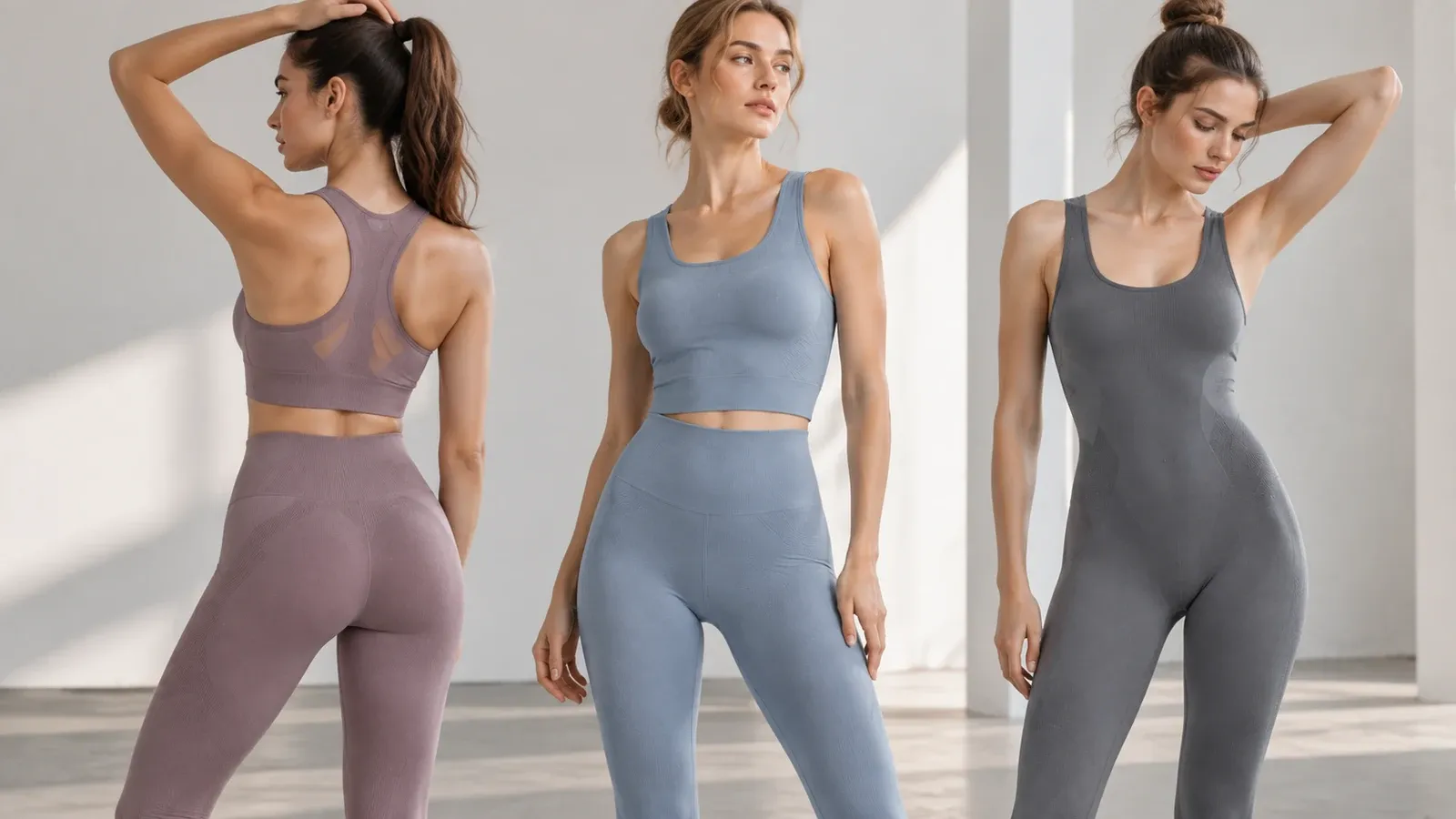
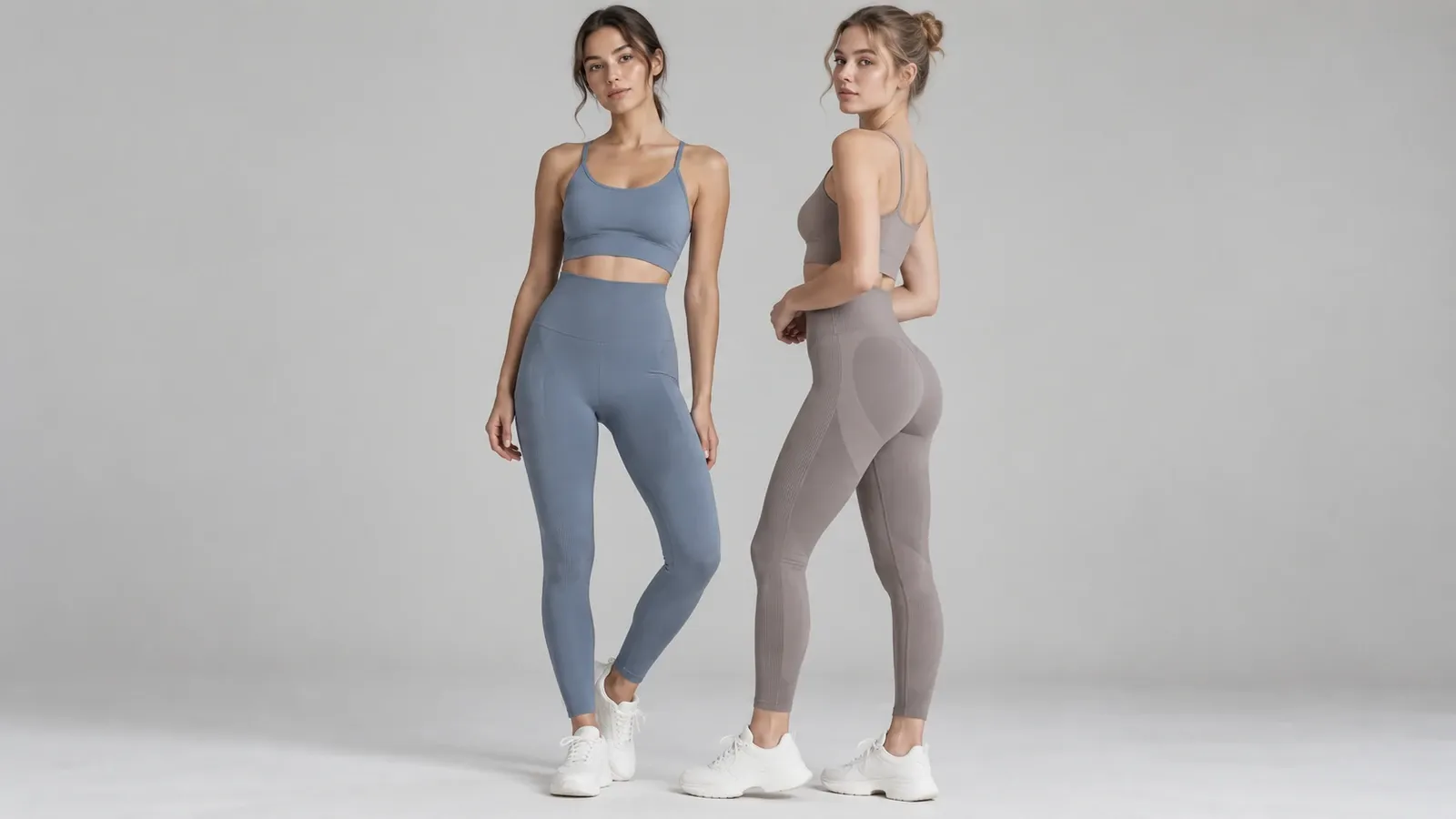
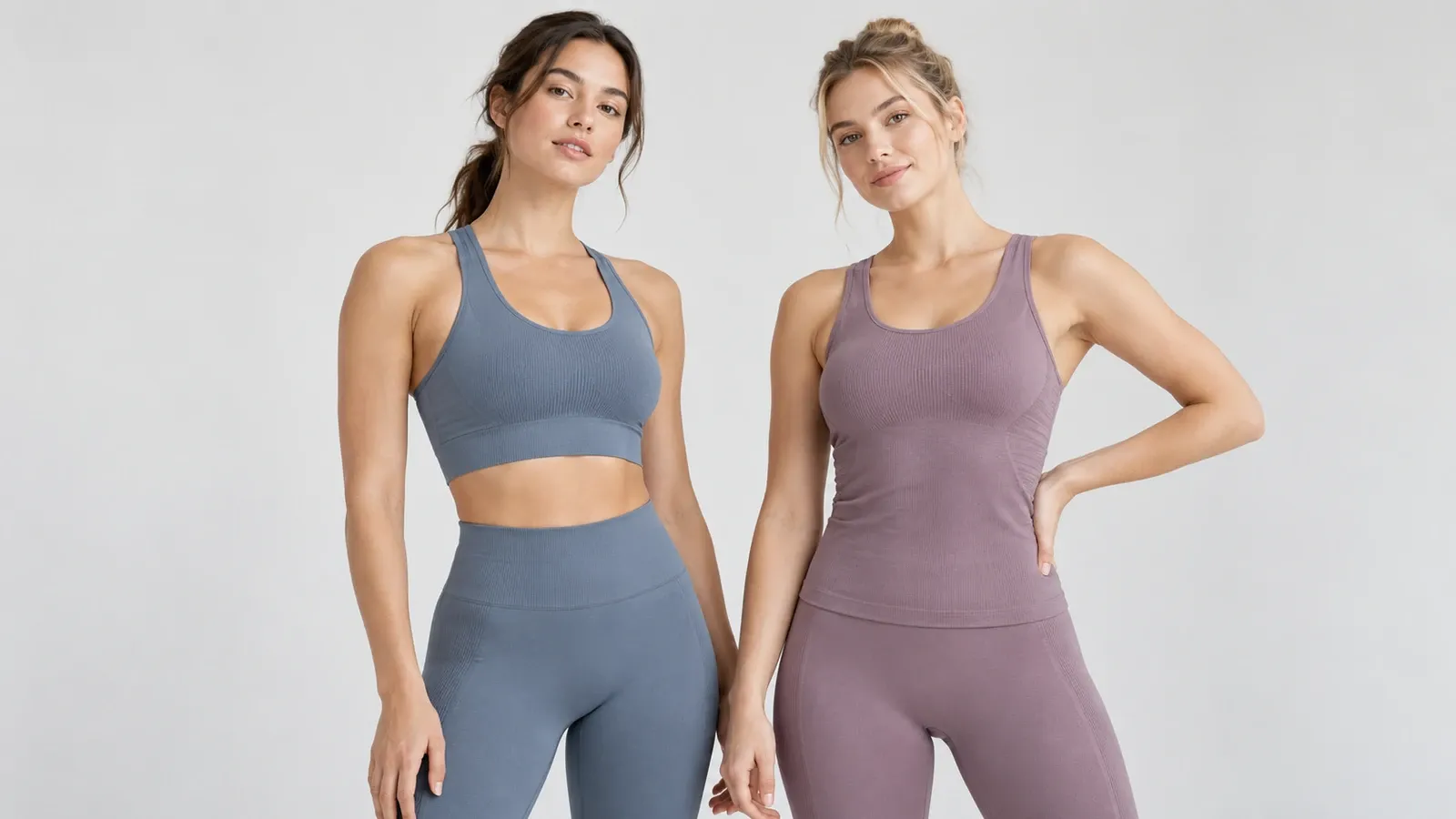
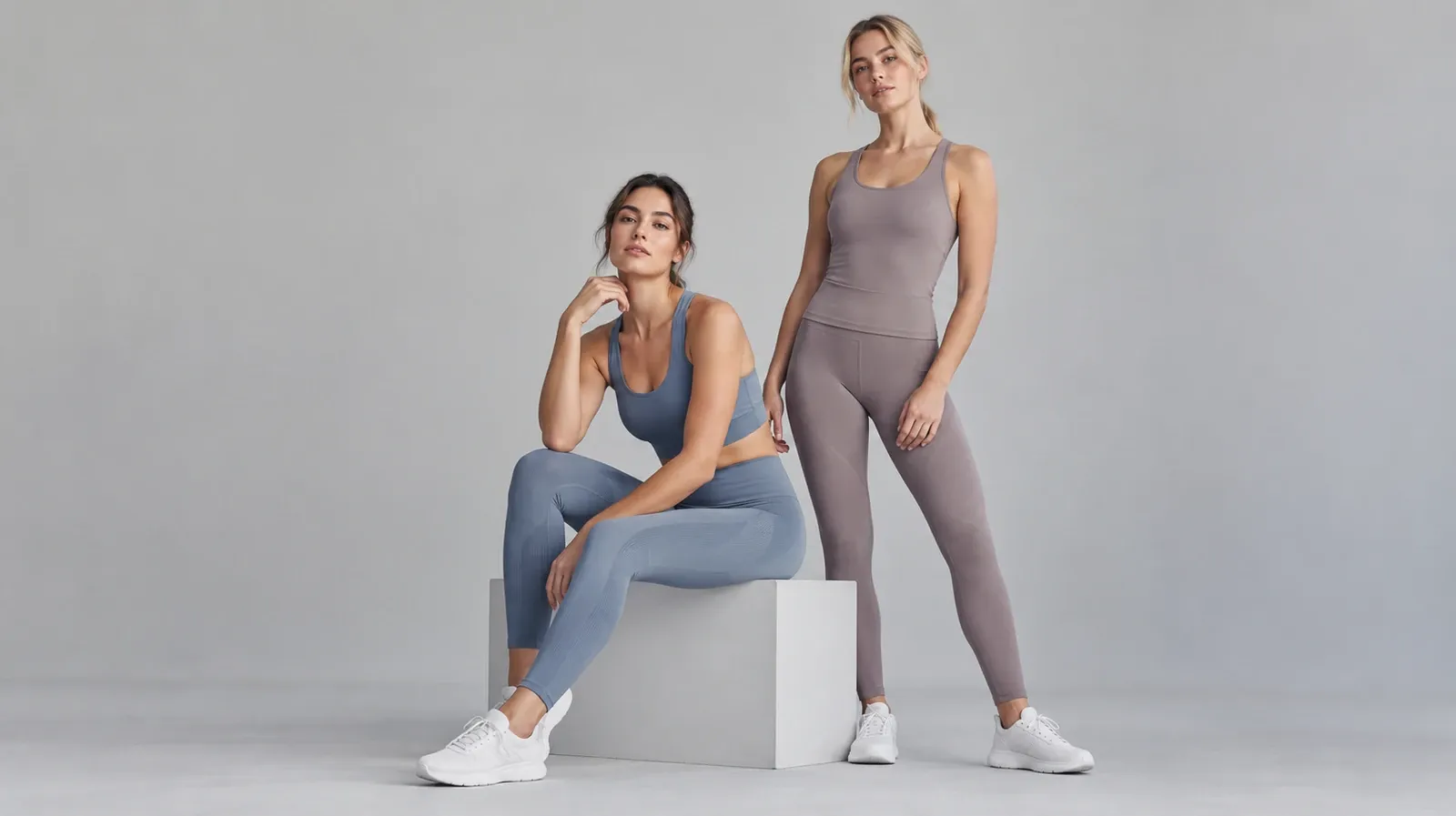
The seamless products on this site — tanks with built-in cups, scrunch biker shorts, unitards, bodysuits with snap crotch, zip-up training tops — are working examples of what we can develop and manufacture. They are not fixed stock styles waiting for a color choice.
Treat them as capability references: point to the one closest to your idea, then tell us what to change — silhouette, support, texture, length, colors, branding. The full range, including cut-and-sew categories, is in the womens apparel catalog.
Seamless Outerwear Development: Training Tops and Jackets
Zip-up training tops and jackets extend a seamless activewear program into outer layers. They are knitted on the same seamless machines as the rest of the range, but the outer-layer role adds construction details that a brand should confirm before sampling:
Zipper construction. The zip is applied at the finishing stage; zipper quality, placket finish and how the front sits against the stand collar shape both the look and the durability of the garment.
Sleeve fit. Sleeves on an outer layer need enough reach and cuff tension for training movement without pulling at the shoulder — this is checked on the sample, not on the size chart alone.
Thumbhole details. Thumbholes hold the sleeve in place during training. Placement and cuff construction should match how your customers actually wear the layer.
Fabric weight and stretch balance. Outer layers carry slightly more structure than a base-layer tank while keeping enough stretch for comfort; the balance is set through knit structure and yarn choice, and confirmed on the sample.
Sample fitting and adjustment. Zip fronts, collar height and cuff details are the points most often adjusted after a first fitting, so plan the fitting round around them.
Two current references show this construction direction: our full-zip long sleeve seamless training top and the textured seamless full-zip training jacket, both developed for OEM and private label activewear programs.
Start your seamless development
If you are planning a seamless activewear program, send us whatever exists on your side: reference images or a competitor sample, a tech pack, your size chart, target market, colors, quantity per style and branding requirements. We will assess the development direction, tell you which parts of the garment are knitted and which are secondary construction, and quote the sampling plan before you commit to anything.