Oct 5, 2026Sourcing Guide
Minimum Order Quantity (MOQ) Explained for Startup Clothing Brands
This guide explains Minimum Order Quantity (MOQ) in apparel manufacturing, helping startup brands manage production costs, select the right factory, and plan product launches.
Author & Source
Author: Connor Ma, International Trade Analyst with 10+ years of experience in apparel manufacturing and global sourcing
Reviewed by: SML Intimate Sales & Production Team
Published by: SML Intimate Manufacturing Insights
Introduction
Minimum Order Quantity (MOQ) is one of the most misunderstood concepts in apparel manufacturing, especially for startup brands.
Many new businesses see MOQ as a barrier, but in reality, it is a necessary part of production planning that directly impacts cost, efficiency, and product quality.
Based on real factory operations, this guide explains what MOQ means, why it exists, and how startup brands can manage it effectively.
What Is MOQ in Clothing Manufacturing?
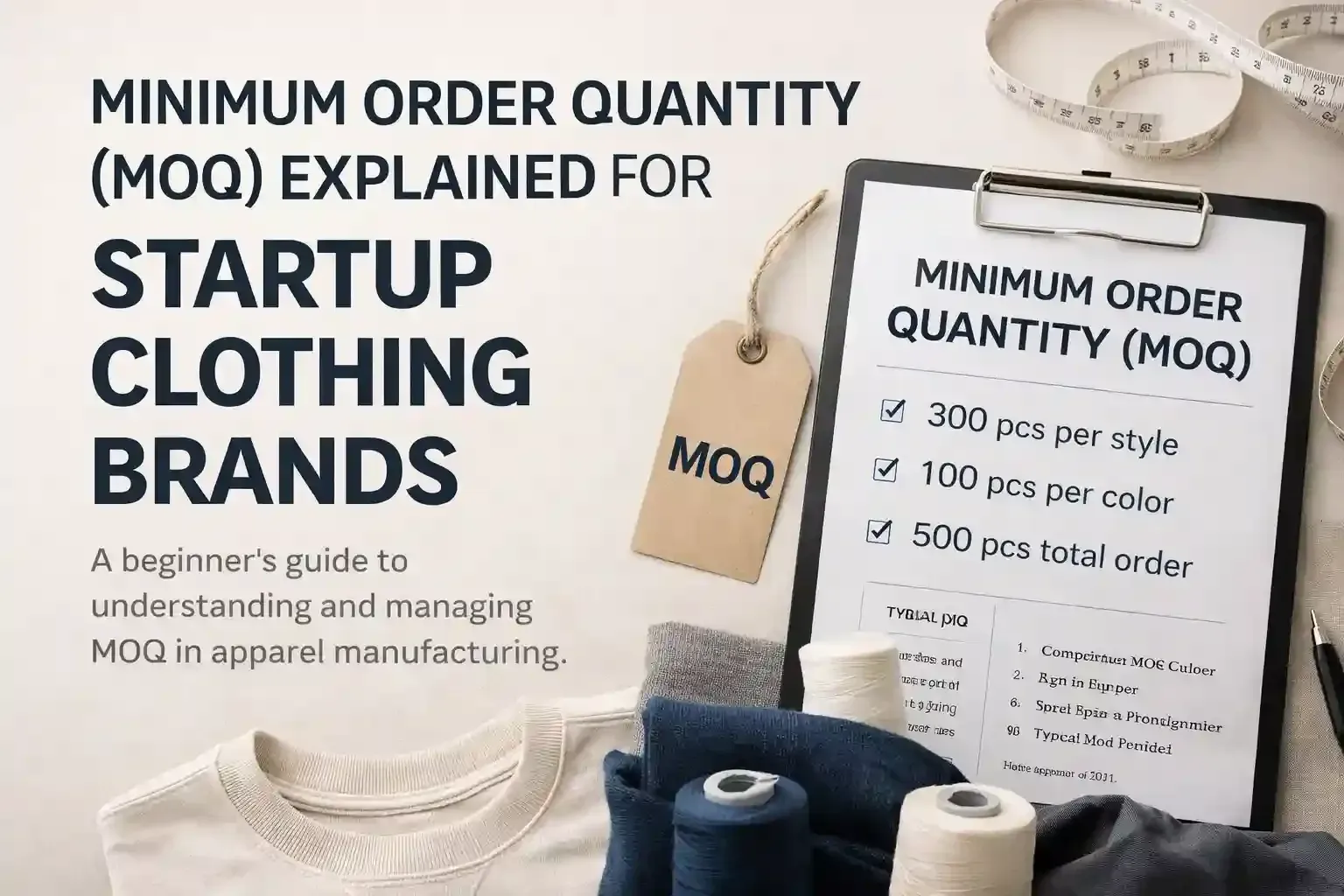
MOQ (Minimum Order Quantity) refers to the lowest number of units a manufacturer requires for production.
MOQ can be structured in different ways:
- Per style (e.g., 300 pcs per design)
- Per color (e.g., 100 pcs per colorway)
- Total order quantity (e.g., 500 pcs combined)
MOQ varies depending on factory capacity, fabric sourcing methods, and production setup.
Working with an experienced OEM apparel manufacturer helps clarify MOQ structure early in the development process.
Why Do Manufacturers Set MOQs?
MOQ is driven by practical production and cost considerations.
1. Fabric Procurement Requirements
Textile mills typically require bulk orders. Smaller quantities increase fabric cost per meter and limit sourcing options.
2. Production Line Efficiency
Cutting, sewing, and finishing all require setup time.
Low quantities reduce efficiency and increase:
- Labor cost per unit
- Machine downtime
- Overall production cost
3. Dyeing & Processing Constraints
Processes such as dyeing, washing, and finishing require minimum batch volumes.
Running small batches leads to:
- Higher cost
- Inconsistent color results
Typical MOQ for Startup Brands
While MOQs vary across factories, common industry ranges include:
- Basic T-shirts: 200–300 pcs per style
- Hoodies / sweatshirts: 300–500 pcs per style
- Custom fabrics or special treatments: 500+ pcs
It is important to confirm whether MOQ applies to:
- Each color
- Size ratio
- Total production quantity
An experienced custom clothing manufacturer can help optimize MOQ based on your product plan.
How Startup Brands Can Manage MOQ
The four classic tactics — fewer SKUs, stock fabrics, flexible partners, pre-orders — all work. Our own MOQ policy follows the product line: our hijab line starts at 50 pieces per style on in-stock fabrics; cut & sew knitwear such as T-shirts and hoodies starts around 300 pieces per style per color; and seamless development is quoted per color and size — long styles from around 500 and shorter styles from around 1,000. Newly sourced or custom-dyed fabrics add mill minimums in every line.
We explained the full math — including why "fully custom at 10 pieces" is impossible at any factory — in Custom Hijab MOQ Explained.
For a real launch built on this approach, see our worked example: How to Start a Hijab Brand with Small Quantities.
MOQ vs Low MOQ Factories
Low MOQ suppliers typically:
- Charge higher unit prices
- Offer limited fabric and customization options
- Operate on smaller production scales
In contrast, established manufacturers usually require higher MOQs but provide:
- Better cost efficiency
- Stable quality control
- Scalable production capacity
Choosing the right partner depends on your brand stage and growth strategy.
Curious where those industry ranges come from, and what a factory can actually flex? Our Custom Hijab MOQ guide covers the factory's side.
Conclusion
MOQ is not a barrier—it is a structural part of apparel manufacturing.
Brands that understand MOQ can:
- Plan production more effectively
- Control costs
- Build sustainable supply chains
Aligning your product strategy with realistic production quantities is essential for long-term success.
Get a Quote
Looking for a manufacturer with flexible MOQ options and scalable production?
Contact us today to work with a trusted custom apparel manufacturer for sampling and bulk production.
References
- McKinsey & Company. The State of Fashion 2025
- Textile Exchange. Preferred Fiber & Materials Report 2025
- SML Intimate Internal Production Data, 2025
- World Bank. Global Manufacturing & Supply Chain Report 2025
Next Step for Buyers
Confirm supplier comparison points — product range, fabric access, sampling, quality control, MOQ logic, and communication — then prepare your buyer inputs and request a sample before bulk.
Browse Our Apparel Catalogs
You can also browse all SML INTIMATE apparel catalogs to keep exploring styles across our product series.