Sep 29, 2026Sourcing Guide
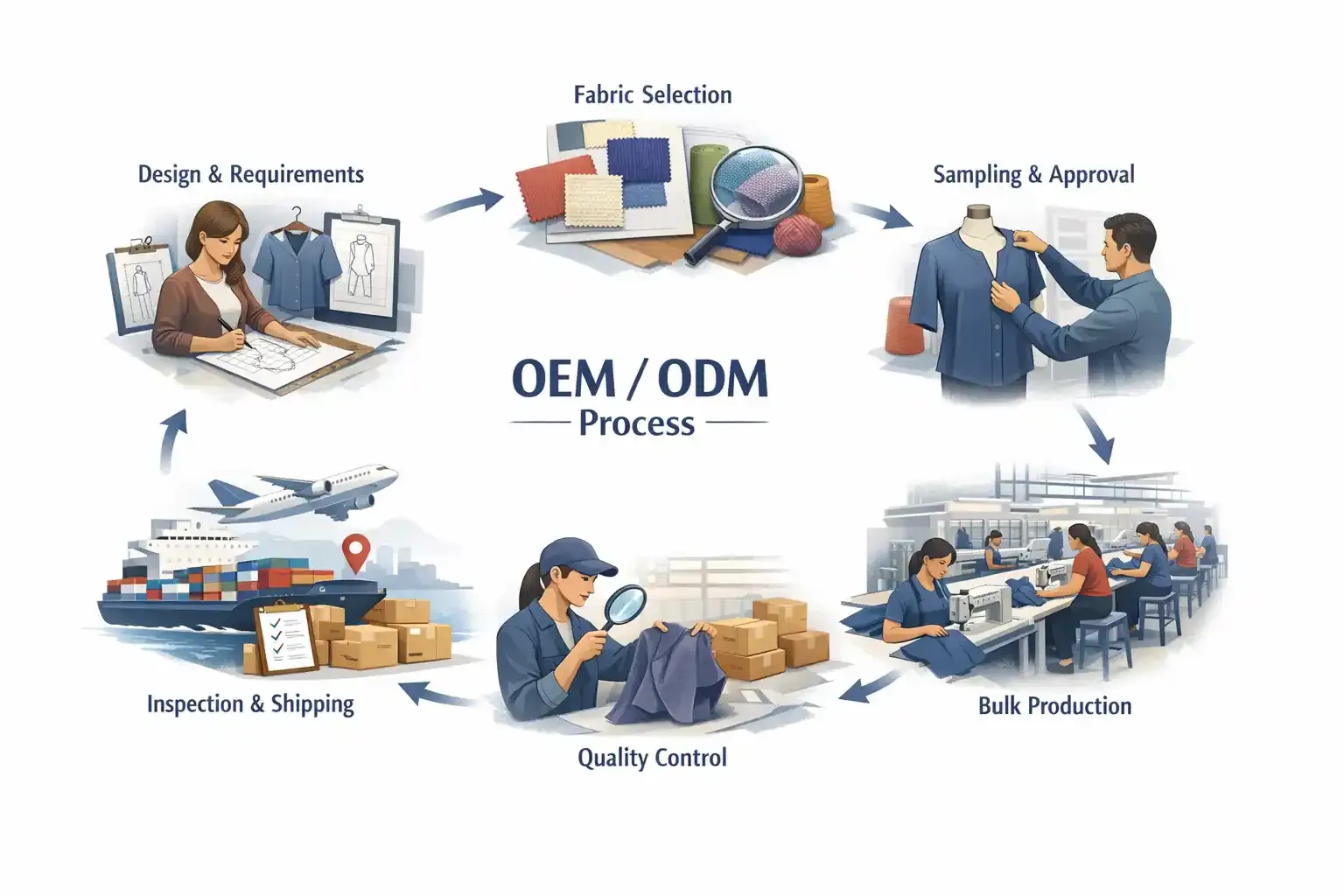
Intimate Apparel OEM/ODM Development Process
How to develop intimate apparel, bodysuits and seamless styles with a factory — from construction route selection and fabric confirmation to sampling, MOQ and bulk production.
A buyer sends a reference photo of a bodysuit or base layer and asks: "Can you make this?" The answer is never a simple yes or no. Before any factory can quote or sample, they need to understand the garment's structure, fabric behavior, construction route, and whether the quantity matches the production method.
This guide explains what happens between "I have a product idea" and "the sample is ready" — specifically for intimate apparel, base layers, bodysuits, and seamless styles.
Start with the Product, Not with OEM or ODM
Buyers often ask "Do you do OEM or ODM?" before describing the product. The manufacturing model matters less than the product itself. A factory needs to know what the garment is before deciding how to produce it.
Instead of choosing a model first, describe the product: what it looks like, what fabric it uses, how it fits, how much stretch it needs, and how many pieces you plan to order. The right production route becomes clear once the product is defined. For a general explanation of OEM, ODM and private label models, see our comparison guide.
First Question: Which Construction Route Fits the Design?
Intimate apparel is a product category, not a production method. A bodysuit, base layer, or camisole can be produced through seamless knitting, cut-and-sew construction, or a combination of both — depending on the design.
The construction route depends on:
- Seam placement — seamless knitting eliminates side seams but cannot add sewn-on details without secondary operations
- Stretch direction and recovery — seamless knits provide consistent four-way stretch; cut-and-sew fabrics can be engineered with different stretch per panel
- Shaping and compression zones — seamless programs can engineer density zones directly into the knit; cut-and-sew uses panel shaping and elastic
- Cups, lining, and support — built-in cups require additional operations regardless of construction route
- Openings and closures — hooks, snaps, and zippers are always applied post-knitting
- Transparency and opacity — knit density affects coverage; sheer panels may need lamination or layering
A design that looks simple in a photo may require a knitting program, secondary cutting, or both. The factory should assess this before quoting — not after the deposit.
Why a Reference Sample Is Often More Useful Than a Photo
Photos show what the garment looks like. They cannot show:
- Fabric thickness and density
- Stretch percentage and recovery
- Transparency under stress
- Internal seam construction
- Reinforcement and bonding methods
- Yarn composition feel
If you have a reference garment whose fit, fabric, or construction you want to match, send it. The factory can reverse-engineer the structure, weight, and stretch from the physical sample far more accurately than from a photo. If you only have images, describe the fabric behavior as specifically as you can — how it stretches, how thick it feels, how transparent it is under stress.
What the Factory Must Confirm Before Sampling
Once the product and construction route are clear, the factory will ask questions. These are not delays — they prevent the first sample from being made in the wrong fabric or the wrong size.
Expect questions about:
- Measurements or size chart
- Yarn composition and target GSM
- Stretch and recovery requirements
- Size range
- Color names and Pantone references
- Closures (hooks, snaps, zippers)
- Cup and lining requirements
- Logo method and placement
- Label and packaging requirements
- Quantity per style and per color
The clearer your answers, the closer the first sample will be to your target. If some details are not decided, tell the factory which elements are fixed and which are open to suggestion.
Sample Development Is Where the Product Is Actually Defined
The first prototype is rarely perfect — and it does not need to be. The sample stage is where the product is actually shaped.
A typical development cycle includes:
- First prototype — checks overall silhouette, construction feasibility, and fabric behavior
- Fit evaluation — measurements, stretch, recovery, and comfort on a body
- Fabric assessment — hand feel, opacity, weight, and surface appearance
- Construction adjustment — seam placement, compression zones, support elements
- Measurement corrections — length, width, rise, strap position, leg opening
- Visual comparison against the reference — what matches, what needs to change
- Second revision — incorporating all feedback before final approval
Tell the factory exactly what is approved and what must be revised after each sample. Do not approve because it "looks close enough." Ambiguity at this stage becomes disputes at bulk.
What Cannot Be Solved Just by Copying the Sample
Some reference products cannot be replicated exactly. Common reasons include:
- Original yarn is proprietary or unavailable
- Fabric was knitted on a different machine gauge
- Knit program is proprietary to the original manufacturer
- Special finishing or dyeing cannot be matched without fabric mill cooperation
- Custom molds or trims are not available at your quantity
- Construction is incompatible with available equipment
A reliable manufacturer will tell you which elements can be matched closely and which must be adjusted. If a supplier promises an exact copy without reviewing the sample, be careful.
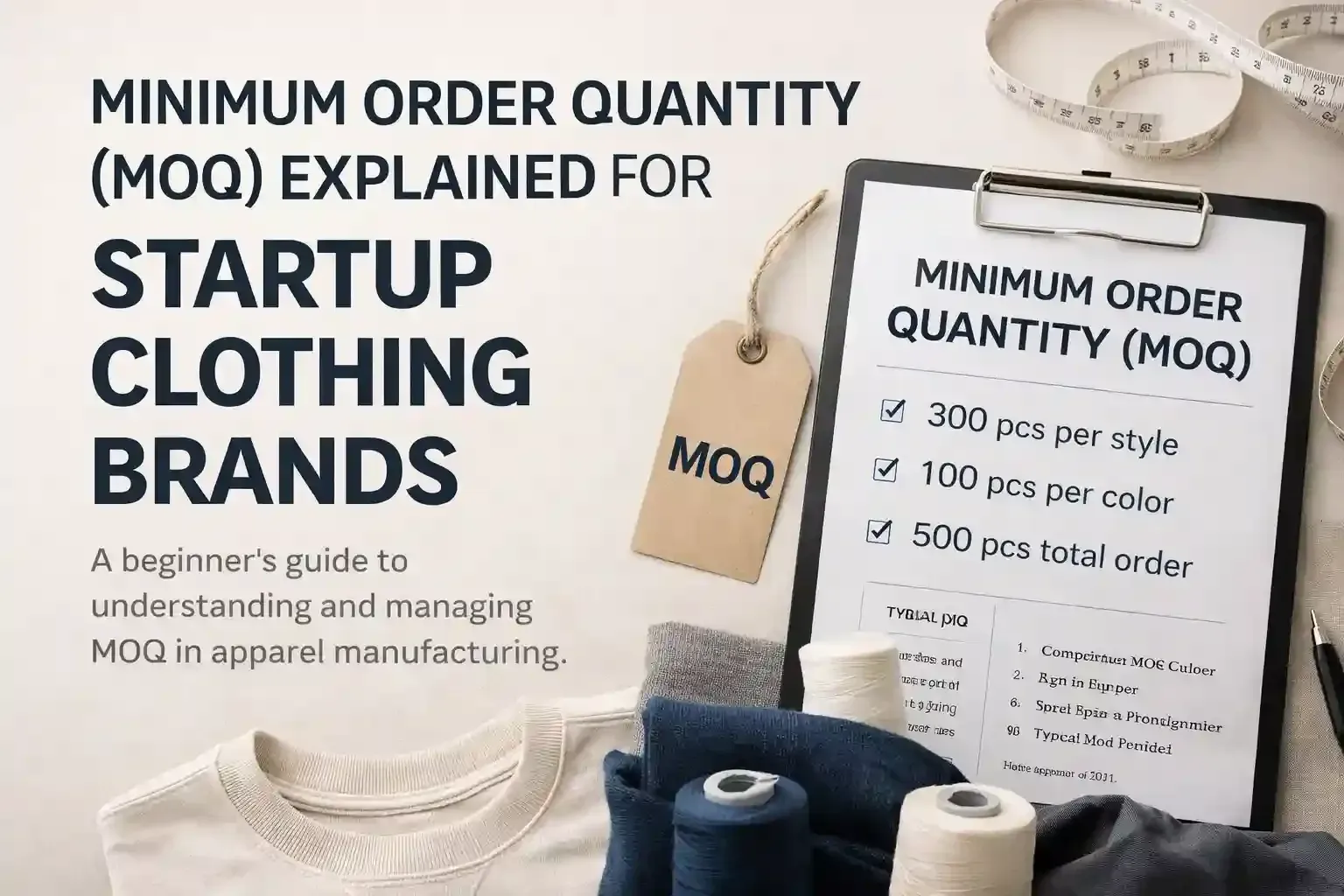
MOQ Depends on the Production Route
Minimum order quantities for intimate apparel depend on the construction route and the material sourcing requirements.
For seamless knitting:
- Longer seamless styles (leggings, full-length unitards): around 500 pieces per color per size
- Shorter seamless styles (sports bras, tanks, camisoles): around 1,000 pieces per color per size
For cut-and-sew intimate apparel: minimums are confirmed based on the fabric, construction, color quantity and material sourcing requirements.
MOQ is confirmed after the design, material, and construction route are reviewed — not before. If your quantity does not match the construction route, the factory should tell you before sampling begins.
From Approved Sample to Bulk Production
After the sample is approved, the following must be confirmed before bulk production begins:
- Final measurements matching the approved sample
- Approved fabric and composition
- Color and color quantity per style
- Size breakdown
- Logo, trims, and labels
- Packaging requirements
- Payment terms
- Production reference sample (PP approval) if applicable
Bulk production should follow the approved specification and confirmed sample — not verbal assumptions. If any element changes after sample approval, it should be documented and reconfirmed.
What to Send Us for an Initial Feasibility Review
If you are developing a bodysuit, base layer, camisole, or seamless style, send us:
- Product photos or drawings
- Reference sample photos or the sample itself
- Tech pack if available
- Material or fabric requirement
- Size range
- Target quantity
- Colors
- Logo and label requirement
- Target market
If some details are not decided, send the reference and describe what you want to achieve. We will assess the suitable construction route, confirm whether seamless knitting is appropriate, identify what additional information is needed, and confirm whether the quantity matches the production method — before you commit to sampling.
View All SML INTIMATE Apparel Catalogs