Sep 29, 2026Sourcing Guide
How to Prepare a Tech Pack for Knitwear Manufacturing (Complete Guide for Brands)
Tech pack guide for knitwear manufacturing, covering sketches, measurements, fabric specs, and construction details to improve sampling accuracy and reduce production errors.
Author & Source
Author: Connor Ma, International Trade Analyst with 10+ years of experience in knitwear development and apparel manufacturing
Reviewed by: SML Intimate Technical & Sampling Team
Published by: SML Intimate Manufacturing Insights
Introduction
A well-prepared tech pack is essential for accurate sampling and efficient bulk production in knitwear manufacturing. Without clear technical documentation, even experienced factories may face misunderstandings that lead to delays, fit issues, and increased costs.
Based on real production experience, a complete tech pack acts as a blueprint that ensures alignment between brand expectations and factory execution.
This guide explains how to prepare a professional tech pack specifically for knit garments such as T-shirts, hoodies, and sweatshirts.
What Is a Tech Pack?
A tech pack (technical package) is a detailed document that communicates all product specifications to the manufacturer.
It is used for:
- Pattern making
- Sample development
- Bulk production execution
For knitwear, precision is especially critical due to fabric stretch, shrinkage behavior, and construction complexity.
Working with an experienced OEM apparel manufacturer ensures your tech pack is interpreted accurately during development.
Key Elements of a Knitwear Tech Pack
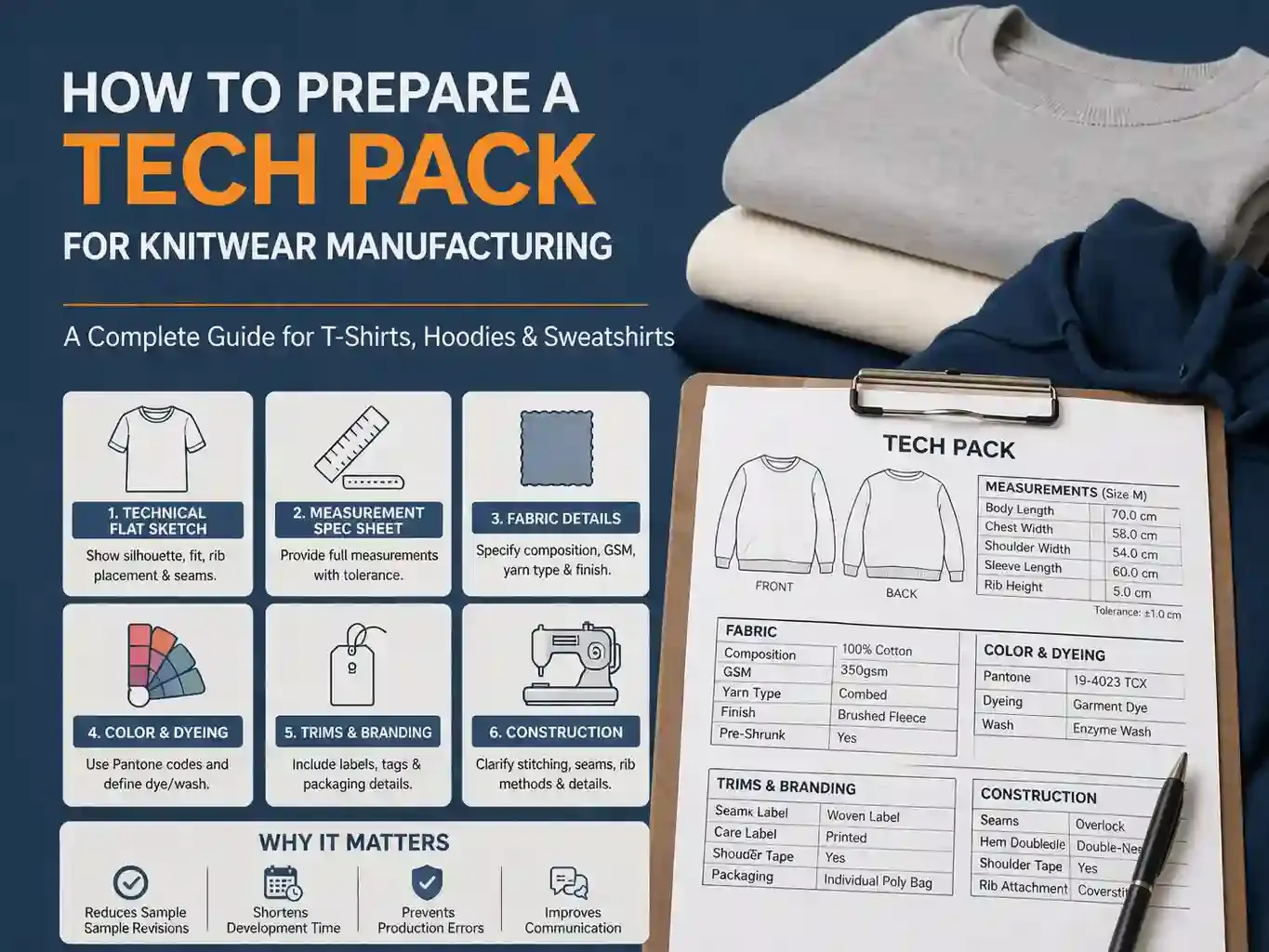
1. Technical Flat Sketch
Provide clear front and back technical drawings.
Include:
- Silhouette and fit (oversized, boxy, regular)
- Rib placement (neckline, cuffs, hem)
- Seam structure and paneling
Factories rely on technical sketches—not mood images—to understand construction details.
2. Measurement Specification (Spec Sheet)
A complete measurement chart should include:
- Body length
- Chest width
- Shoulder width
- Sleeve length
- Rib height
Also define tolerance (e.g., ±1 cm), as knit garments naturally allow variation due to elasticity.
Accurate spec sheets are critical for fit consistency across sizes.
3. Fabric Details
Clearly define all fabric-related specifications:
- Composition (e.g., 100% cotton, cotton-poly blend)
- GSM (e.g., 240gsm, 350gsm)
- Yarn type (combed, carded, ring-spun)
- Brushing or fleece finishing
- Pre-shrunk treatment
Fabric selection directly affects garment weight, structure, and durability.
A professional custom knitwear manufacturer can help validate fabric feasibility before sampling.
4. Color & Dyeing Instructions
Specify color and finishing requirements:
- Pantone color codes
- Fabric dye or garment dye
- Wash treatments (enzyme wash, pigment dye, vintage wash)
Clear color instructions reduce shade variation and ensure consistency in bulk production.
5. Trim & Branding Details
Include all branding elements:
- Neck labels (woven or printed)
- Care labels
- Hang tags
- Packaging requirements
Attach artwork files in vector format (AI or PDF) to avoid misinterpretation.
6. Construction & Stitching Requirements
For knitwear, construction details are essential.
Specify:
- Overlock or flatlock seams
- Double-needle hems
- Shoulder reinforcement tape
- Rib attachment methods
Construction standards directly impact garment durability, cost, and appearance.
Common Mistakes Startup Brands Make
Based on factory experience, common issues include:
- Providing only reference photos
- Missing measurement tolerances
- Not specifying fabric GSM
- Ignoring shrinkage rates
- No size grading chart
These mistakes lead to:
- More sampling rounds
- Miscommunication
- Increased development cost
Why a Detailed Tech Pack Saves Cost
A complete tech pack significantly improves production efficiency:
- Reduces sample revisions
- Shortens development timelines
- Prevents bulk production errors
- Improves communication with suppliers
Brands that invest in technical preparation typically achieve faster turnaround and more consistent product quality.
Conclusion
A professional tech pack is the foundation of successful knitwear production. The more detailed and accurate your documentation, the smoother the sampling and manufacturing process will be.
Successful brands treat tech packs as a critical investment rather than an optional step.
Get a Quote
Need support preparing your tech pack or developing knitwear samples?
Contact us today to work with an experienced custom clothing manufacturer for technical development and bulk production.
References
- McKinsey & Company. The State of Fashion 2025
- Textile Exchange. Preferred Fiber & Materials Report 2025
- SML Intimate Internal Development & Sampling Data, 2025
- World Bank. Global Apparel Manufacturing Insights 2025