Sep 29, 2026Sourcing Guide
How to Choose a Knitwear Manufacturer for Your Private Label
How to compare knitwear manufacturers based on product understanding, fabric capability, sampling quality and specification alignment — not just price and MOQ.
When you have a real product to develop, several suppliers will tell you they can make it. The challenge is not finding a factory that says yes — it is knowing which one actually understands your product and can deliver what you need.
This guide assumes you have already verified that the suppliers on your list are real manufacturers. If you have not, start with our verification checklist first. This article focuses on what to evaluate after that step.
A Good Factory Is Not Automatically the Right Factory for Your Product
A large factory with many product lines is not better for your project than a smaller one that specializes in what you need. The question is not "is this a good factory" — it is "does this factory have the right machines, materials, and experience for my specific garment."
A workshop that excels at heavyweight fleece hoodies may not be the right choice for lightweight ribbed camisoles. A factory that produces seamless activewear may not have the cut-and-sew construction capability your design requires. The fit between factory capability and your product is what determines the outcome.
Start by Testing Whether They Understand Your Product
Send each supplier the same starting information: product photos or a reference sample, fabric requirement, target quantity, size range, and customization needs. Then observe what they ask back.
A supplier that understands knitwear will ask about:
- Fabric structure (jersey, rib, interlock, French terry, fleece)
- Composition and stretch percentage
- GSM or weight range
- Measurement spec or size chart
- Construction details (seam type, stitching, rib attachment)
- Color quantity and Pantone references
- Logo method and placement
- Packaging requirements
If a supplier quotes a price without asking about fabric, GSM, or construction, the quote is based on assumptions. It will change once the real specification is clear.
Evaluate Fabric Capability, Not Just Fabric Choices
Some suppliers show a large fabric catalog. That is not the same as having fabric capability. What matters is whether the supplier can translate what you want — soft, structured, stretchy, compact — into a producible specification.
Ask specific questions: "What knit structure would you suggest for this garment?" or "How would this fabric behave after washing?" The supplier's answer tells you whether they understand the relationship between structure, composition, finishing, and end-use performance.
For how to describe your fabric requirement accurately, see our guide on specifying knit fabric and GSM.
Ask How They Would Make Your Product
Once you have shared your product details, ask each supplier:
- What fabric structure would you suggest?
- What would you change from my reference?
- Which construction point is most difficult?
- What may affect the MOQ?
- What should be confirmed in sampling?
This is not a test of knowledge. It is a test of engagement. A supplier who takes the time to understand your product and explain their approach is more likely to handle production problems properly. A supplier who answers everything with "yes, no problem" has not read your spec.
Use Sampling to Evaluate the Manufacturer, Not Only the Garment
The sample stage tests two things at once: the garment and the supplier.
Beyond checking fit, fabric, and construction on the sample, observe:
- Whether the supplier confirmed the spec before starting
- Whether modifications were made accurately
- Whether problems were flagged before production or after
- Whether changes are documented and carried into the next sample
- Whether the supplier explains what cannot be done as requested
- Whether measurements, fabric, and construction match the confirmed version
A factory that repeats the same mistake across sample rounds will repeat it during bulk. A factory that documents revisions and explains trade-offs is more likely to handle production issues transparently.
Compare Quotations Only After the Specification Is Aligned
Different suppliers use different fabrics, GSM, trims, finishing, and packaging. Comparing unit prices before the specification is aligned tells you nothing.
Before comparing quotes, confirm that each supplier has quoted based on the same:
- Fabric composition and GSM
- Knit structure
- Color quantity and dyeing method
- Trim and label quality
- Packaging
- Sampling cost and refund terms
- MOQ per style and per color
If one supplier quotes a higher price because they included better fabric or more complete finishing, that is not a disadvantage. It is a different starting point.
Check Whether the MOQ Fits Your Development Plan
MOQ should not be evaluated as a standalone number. It must be considered alongside fabric availability, color quantity, material sourcing, production method, and size breakdown.
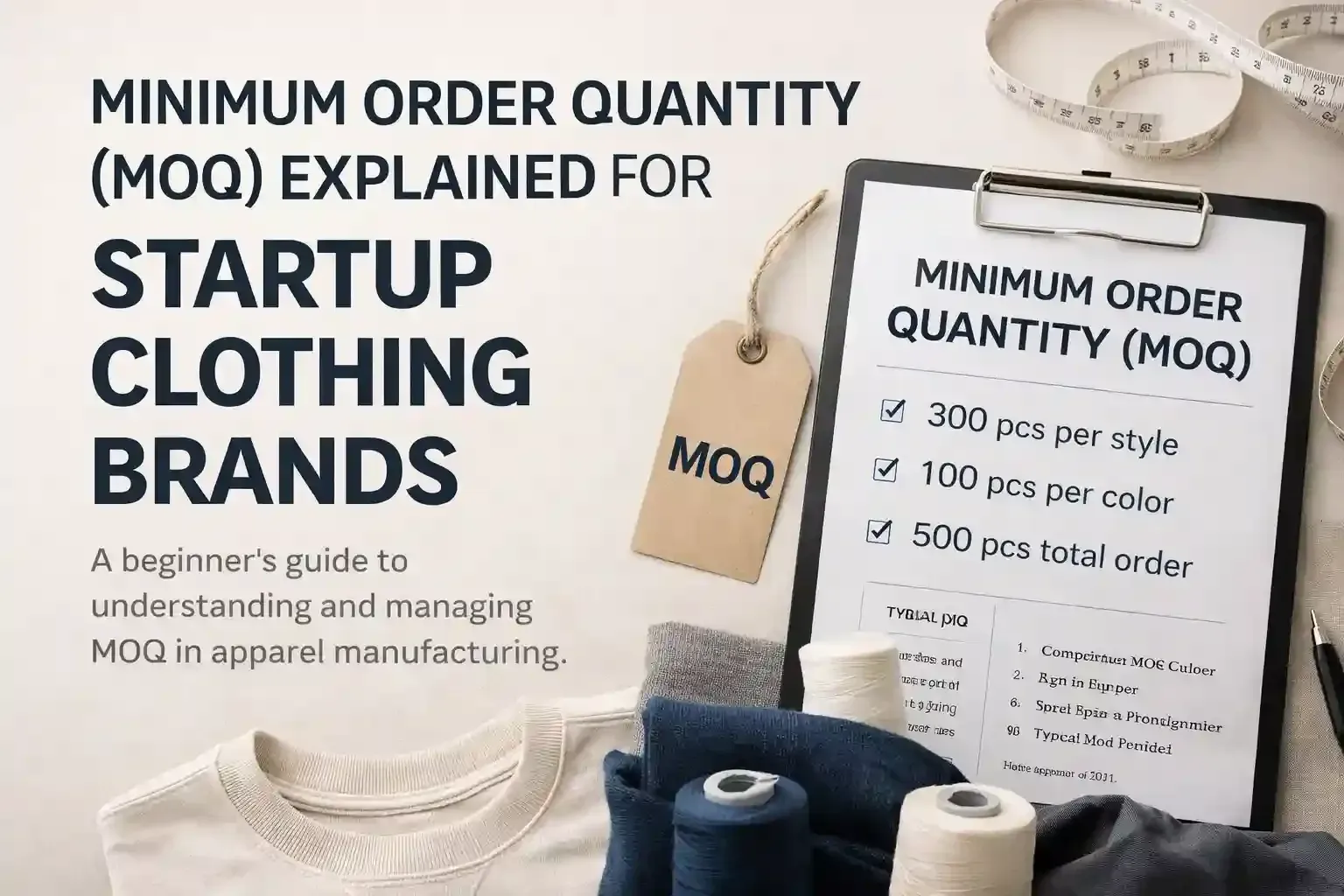
For cut-and-sew knitwear programs, minimums typically start around 300 pieces per style per color. This can change based on the fabric source, dyeing requirements, and customization level. Confirm the MOQ after the fabric and construction are agreed — not before.
If your quantity is below a supplier's MOQ, ask whether they can suggest an alternative fabric or construction that matches your volume. A supplier who explains the reason for their MOQ is more useful than one who simply states a number.
A Reliable Manufacturer Should Tell You What Will Not Work
A reliable manufacturer should tell you when a fabric cannot achieve the effect in your reference, when a construction detail does not suit the available process, when a color or material is restricted by mill minimums, or when a design choice carries quality risk at bulk.
These conversations are not objections. They reduce misunderstandings, rework, and cost overruns. A supplier who says yes to everything without reviewing your spec is either not reading it or planning to adjust after your deposit.
What to Send Us for a Project Review
If you are developing knitwear under your own label, send us:
- Product photos or sketches
- Tech pack if available
- Reference garment if available
- Fabric requirement
- Target GSM if known
- Quantity per style and color
- Colors
- Size range
- Logo, label, and packaging requirements
If some details are not decided yet, send what you have. We can review whether the project matches our production capability and suggest the next step — before you commit to sampling.
Explore More Knitwear Styles