Sep 29, 2026Manufacturing & Quality
Garment Care Labels: What Brands Should Confirm Before Production
Care instructions should follow the actual finished garment. Learn what to confirm about fabric, finishing and shrinkage before care labels are finalized for production.
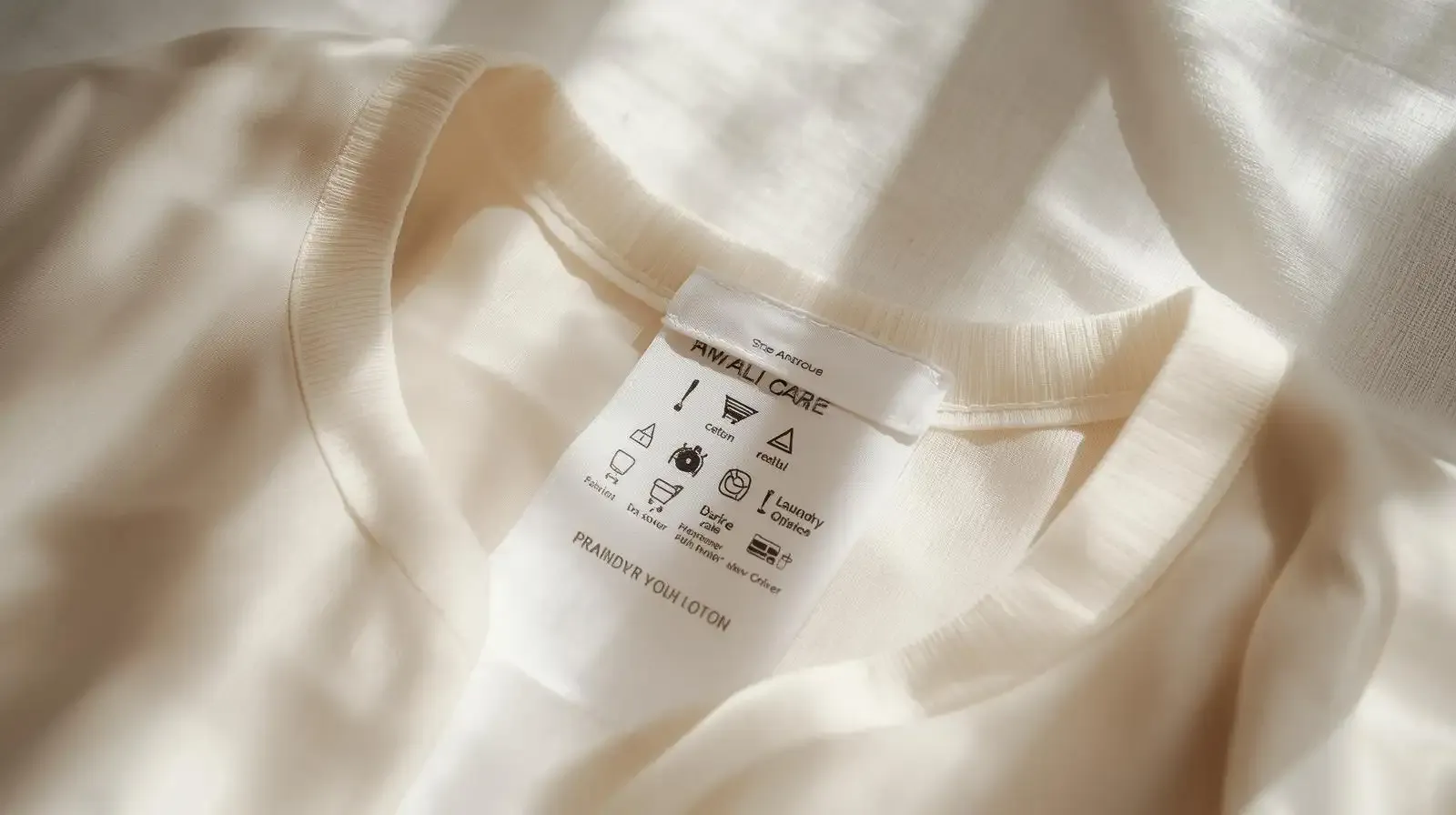
Some brands finalize their care label artwork before the garment sample is even approved. If the fabric, finishing, or construction changes during development — and it often does — the care instructions on the label may no longer match the actual product.
This guide explains what to confirm, in what order, so the care label on your finished garment is accurate.
Do Not Finalize the Care Label Before the Garment Is Confirmed
Care instructions should describe the finished garment — not the fabric you planned to use, not the reference sample you started from, and not a generic guide for the fiber type.
If any of the following change during development, the care instruction may need to be revised:
- Fabric composition or knit structure
- Dyeing or finishing process
- Printing or decoration method
- Trim or elastic content
- Garment washing treatment
Confirm the care label content only after the approved sample matches what will go into bulk production.
Fiber Content Alone Does Not Determine the Care Instruction
"95% cotton / 5% elastane" is a starting point. It does not determine the full care instruction on its own.
The same fiber content can require different care depending on:
- Knit structure (single jersey, rib, interlock)
- Surface finish (brushed, peached, compacted)
- Dye type (reactive, pigment, garment dye)
- Printing method (screen print, heat transfer, DTG)
- Trim composition (elastic, lace, metal components)
- Construction (bonded seams, layered panels)
Tell the factory what the garment is made of and how it is finished — then confirm the care instruction together.
Use the Approved Sample as the Production Reference
The care label should match the final approved sample in every relevant detail: fabric, trims, printing, washing treatment, and construction. If the sampling process changes any of these, the earlier care label version should not be carried forward automatically.
Before bulk production begins, confirm that the care label content matches the actual garment specification.
Shrinkage Is One of the First Things to Check
After washing, the garment may shrink or relax. If the shrinkage is significant, it affects not only the fit but also the accuracy of the care instruction — and whether the washing method shown on the label is realistic.
Confirm the shrinkage behavior during sampling before locking the care instruction. For more on how to approach shrinkage in knitwear, see our shrinkage guide for pure cotton garments.
Finishing and Decoration Can Change the Care Requirement
A garment made from the same base fabric can require different care after finishing or decoration is applied:
- Brushing — raised fibers may be more sensitive to high heat or aggressive washing
- Garment dye — may require cold wash to preserve color depth
- Pigment print — may crack or fade under high-temperature washing
- Heat-transfer logo — may peel under high-heat drying or ironing
- Elastic or trims — may degrade under chlorine bleach or high heat
The care label belongs to the finished garment, not just the raw fabric.
What the Care Label Needs to Communicate
Standard care labels use five categories of symbols. What matters for a brand buyer is not memorizing the icons — it is confirming the right instruction in each category before the label goes to print:
Care Category | What the Buyer Needs to Confirm |
|---|---|
Washing | Suitable method (machine / hand) and temperature range |
Bleaching | Whether bleaching is permitted, and with what agent |
Drying | Tumble dry, line dry, or flat dry — and temperature |
Ironing | Whether ironing is allowed, and under what condition |
Professional Care | Whether dry cleaning or wet cleaning restrictions apply |
Do not create care instructions from a general fabric description. Base them on the finished garment's actual behavior after washing and finishing.
Do Not Copy a Competitor's Care Label Blindly
Even if a reference garment looks similar to your product, the care label on it may not apply to yours because:
- The fiber composition or blend ratio is different
- The finishing or dyeing process is different
- The trims or elastics behave differently under washing
- The shrinkage behavior is different
- The destination market has different labeling requirements
A competitor's care label is a reference point. It is not a substitute for confirming your own garment's care requirements.
Label Content and Compliance Requirements
Care labeling requirements vary by destination market. Label content, language, and mandatory information should be confirmed for the specific order before bulk production. Confirm these requirements with your legal or compliance team for the target market — the factory can support label production but does not provide legal compliance advice.
What Brands Should Send Before Care Labels Are Produced
- Target market
- Final fiber composition (confirmed after sample approval)
- Approved fabric and construction
- Approved garment sample
- Print / embroidery / trim details
- Preferred label size and material
- Languages required
- Brand artwork for the label
- Any retailer-specific labeling requirements
How We Handle Care Labels During Development
We confirm the care label content after the product specification is finalized — not before. This means:
- Final composition is confirmed after the approved sample
- Label artwork, size, placement, and sewing method are confirmed with the buyer
- If any material changes during development, the label content is re-confirmed before bulk
Labels are produced after the garment is confirmed — not before the product is finalized.
What to Send Us for a Label Review
If you are developing knitwear and need to confirm care label content, send us:
- Product or tech pack
- Final fiber composition
- Target market
- Current care label artwork if available
- Label dimensions and material preference
- Placement and sewing method
- Packaging or branding requirements
If the care label has not been designed yet, we can confirm the composition and specification during product development so the label is accurate when it goes to print.
Browse Our Apparel Catalogs
You can also browse all SML INTIMATE apparel catalogs to keep exploring styles across our product series.