Sep 29, 2026Manufacturing & Quality
Bulk Production Timeline for Knitwear Brands: A Practical Guide for 2026
Knitwear bulk production timeline explained: from fabric sourcing to shipping, optimize lead times, ensure quality, and plan launches efficiently.
Author & Source
Author: Connor Ma, International Trade Analyst with 10+ years of experience in knitwear production and global apparel supply chains
Reviewed by: SML Intimate Production Team
Published by: SML Intimate Manufacturing Insights
Introduction
For knitwear brands, understanding the bulk production timeline is essential for planning product launches, managing inventory, and meeting delivery deadlines.
Based on real factory operations and production experience, a typical knitwear order involves multiple stages—from fabric sourcing to final shipment—each requiring careful coordination. Delays at any stage can impact lead times, increase costs, and affect customer satisfaction.
This guide outlines a realistic production timeline for knitwear manufacturing and highlights key factors that influence delivery schedules.
1. Fabric Sourcing & Pre-Production Planning
The production process begins with fabric sourcing and technical preparation.
Typical timeline:
- Fabric sourcing: 5–10 days
- Sample fabric testing: 7–14 days
- Tech pack finalization: 3–5 days
At this stage, clear communication with your manufacturer is critical. Accurate specifications—including fabric composition, GSM, and color—help avoid delays in later stages.
Working with an experienced custom knitwear manufacturer can significantly improve sourcing efficiency and reduce sampling errors.
2. Pattern Making & Size Grading
Pattern development directly impacts garment fit and consistency.
Typical timeline:
- Pattern making: 2–4 days
- Size grading: 1–3 days
Professional pattern development reduces the need for repeated sampling and ensures better fit accuracy across size ranges.
3. Sampling Phase
Sampling is one of the most critical stages in knitwear production.
Typical timeline:
- First sample: 5–7 days
- Sample revisions: 5–7 days per round
- Pre-production (PP) sample approval: 3–5 days
This stage ensures that the garment meets requirements for fit, construction, and quality before bulk production begins.
4. Fabric Cutting & Sewing
Once samples are approved, bulk production starts.
Typical timeline:
- Fabric cutting: 1–3 days (depending on order size)
- Sewing and assembly: 7–14 days
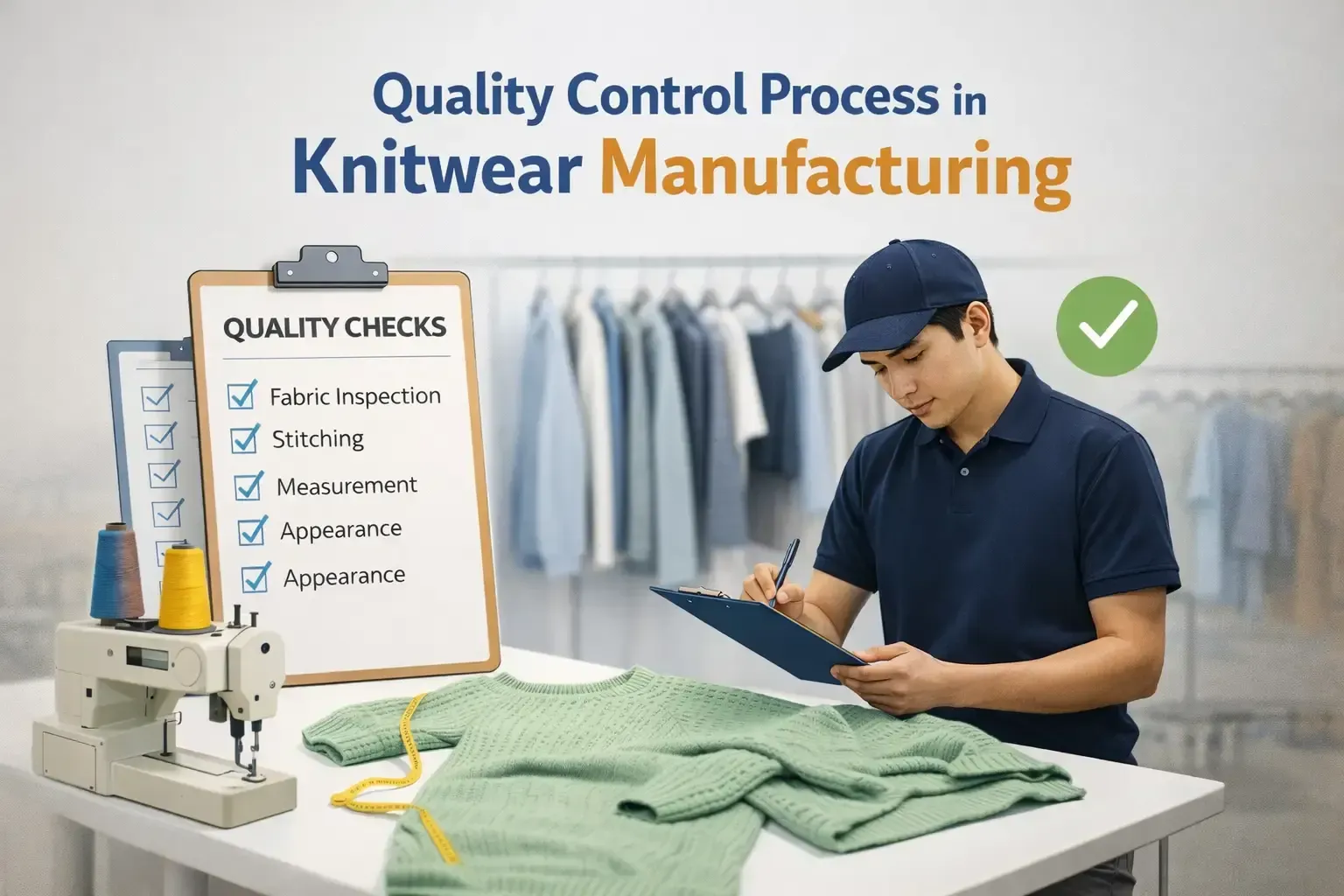
Factories typically implement in-line quality control during this stage to maintain consistency and reduce defects.
5. Finishing & Washing Processes
Finishing treatments enhance the final product’s appearance and performance.
Typical timeline:
- Washing / garment dye / brushing: 3–5 days
- Drying, pressing, trimming: 1–2 days
These processes ensure correct fabric hand feel, shrinkage control, and color consistency.
6. Final Quality Control & Packaging
Before shipment, products undergo final inspection and packaging.
Typical timeline:
- AQL inspection: 1–2 days
- Folding, labeling, packing: 1–2 days
Strict quality control at this stage helps prevent returns and ensures products meet buyer expectations.
7. Shipping & Delivery
Delivery timelines vary depending on logistics and destination.
Typical timeline:
- Domestic shipping: 2–7 days
- International shipping: 7–21 days
Early logistics planning is essential to avoid delays, especially for seasonal collections.
Typical Total Production Timeline
For a standard knitwear order (500–1000 units):
- 4–6 weeks from PP sample approval to bulk completion
- 6–10 weeks total including sourcing and sampling
Complex designs, custom fabrics, or peak-season production may extend timelines.
Key Factors That Affect Production Lead Time
Based on manufacturing experience, timelines can vary due to:
- Fabric availability and dyeing requirements
- Order quantity and production capacity
- Design complexity and customization level
- Communication efficiency between brand and factory
Brands that work with a reliable OEM apparel manufacturer typically experience fewer delays and more predictable delivery schedules.
Conclusion
Understanding the bulk production timeline allows knitwear brands to plan more effectively, reduce risks, and meet market deadlines.
Successful production depends on:
- Clear technical specifications
- Efficient sampling processes
- Strong factory coordination
- Proactive scheduling
For brands aiming to scale, working with an experienced manufacturing partner ensures consistent quality and reliable lead times.
Get a Quote
Looking for a dependable knitwear production partner?
Contact us today to work with a professional custom clothing manufacturer for sampling, bulk production, and global delivery support.
References
- McKinsey & Company. The State of Fashion 2025
- Textile Exchange. Preferred Fiber & Materials Market Report 2025
- SML Intimate Internal Production Data, 2025
- World Bank. Global Supply Chain Report 2025
Our Real Numbers at SML Intimate
The ranges above are industry benchmarks. Our own numbers for a first order are shorter: sampling 7–10 days and bulk production 20–30 days after sample approval, with in-line QC during sewing and QC photos sent to you before shipment. Payment is by T/T — 30% deposit, 70% balance before shipment.
Ready to plan yours? Request a quote and we will reply within 24 hours.