Sep 29, 2026Manufacturing & Quality
How to Specify Knit Fabric & GSM for Garment Manufacturing
GSM alone does not define a fabric. Learn how to describe knit structure, composition, hand feel and finishing to your factory — so sampling matches what you actually want.
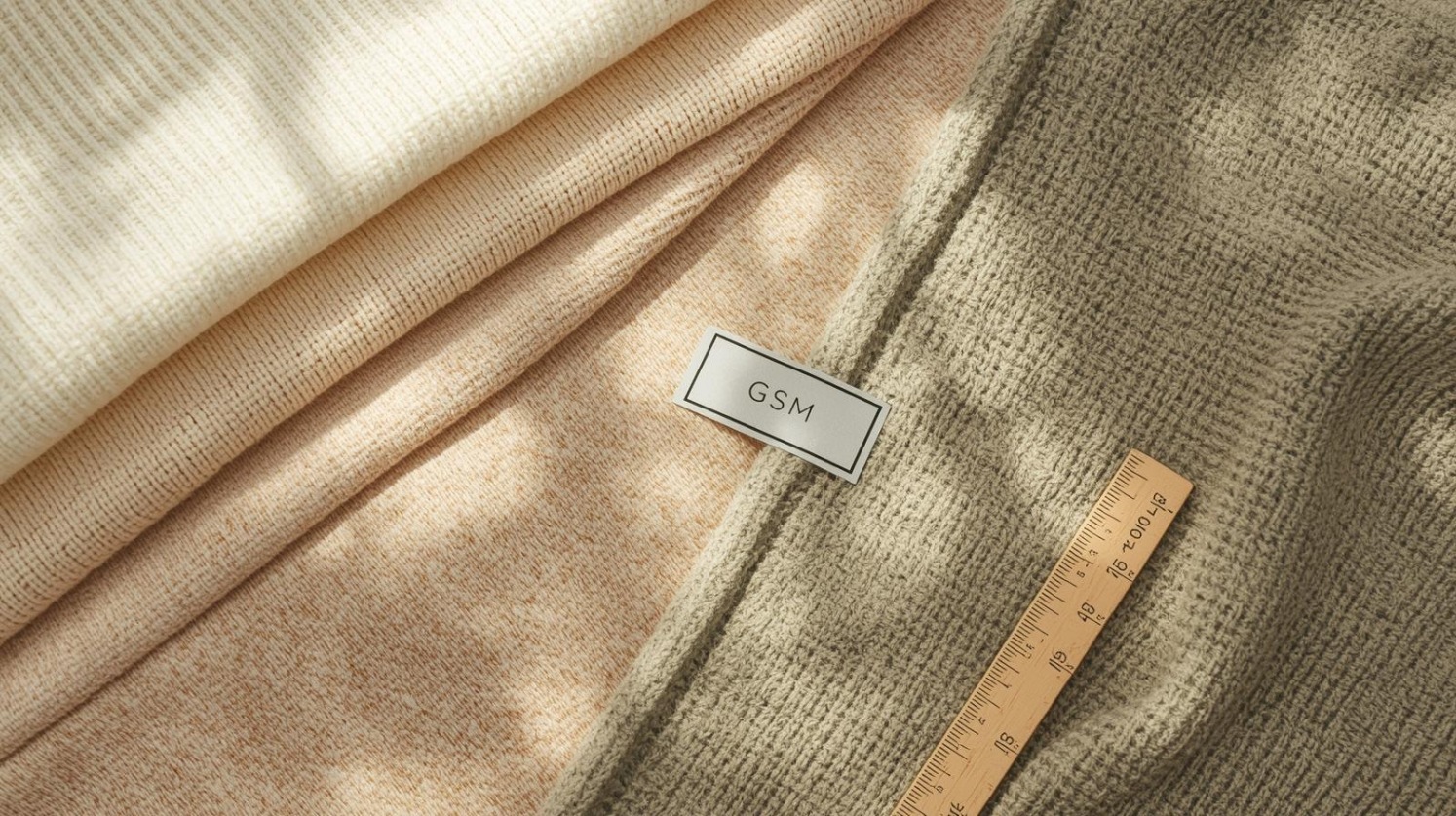
Many buyers send their first inquiry with a single number: "I need 300 GSM cotton fabric." But two knits at the same GSM can behave completely differently depending on structure, yarn, composition, and finishing. GSM only tells the factory how much the fabric weighs per square meter — it does not tell them how it should feel, stretch, drape, or wear.
This guide explains what to tell the factory so they can actually develop the fabric you want.
GSM Alone Is Not a Fabric Specification
GSM (grams per square meter) measures fabric weight. It does not define thickness, softness, stretch, structure, warmth, drape, opacity, or durability.
The same 300 GSM can be a dense interlock, a mid-weight French terry, or a brushed fleece. These are completely different products with different end uses. If you only give the factory a number, they will choose the structure for you — and you may not get what you expected.
Start with the Product You Are Developing
The first thing a factory needs to know is not the GSM. It is what you are making.
A fitted T-shirt, an oversized hoodie, a pair of joggers, and a loungewear set each need different combinations of stretch, structure, recovery, and hand feel. Before discussing fabric, tell the factory: "I am developing [product type] for [target market]."
From there, the factory can suggest suitable knit structures and GSM ranges based on what has worked for similar products.
Tell the Factory the Fabric Structure
Knit structure determines how the fabric behaves. Here are the structures most commonly used in cut-and-sew knitwear:
Single Jersey — the most basic knit. Lightweight, smooth face, moderate stretch. Used for T-shirts, basic tops, and lining. Rolls at the edges and curls — not ideal for structured garments without additional finishing.
Rib (1×1, 2×2) — vertical lines of raised knit. Higher stretch and recovery than jersey. Used for cuffs, collars, hems, and fitted tops. Heavier than jersey at the same GSM due to higher yarn density.
Interlock — two layers of jersey knitted together. Smooth on both sides, more stable, less stretch than rib. Used for premium T-shirts, dresses, and baby clothing where opacity and stability matter.
French Terry — looped back, unbrushed. Breathable with moderate warmth. Used for year-round sweatshirts, joggers, and casual sets. For a detailed comparison with fleece, see our French Terry vs Fleece guide.
Fleece / Brushed Knit — French terry with the loop side brushed or raised into a nap. Warmer, softer inside, more structure. Used for hoodies, sweatshirts, and cold-weather loungewear.
If you are not sure which structure fits your product, send a reference garment or photo. The factory can identify the structure from the fabric surface and reverse-engineer the spec.
Composition Changes the Result
The same structure behaves differently depending on fiber content. A 240 GSM single jersey in 100% cotton will shrink and wrinkle more than the same weight in a cotton-poly blend. Adding elastane increases stretch and recovery but changes dyeing behavior and cost.
Common combinations and what they do:
- 100% cotton — breathable, natural hand feel, moderate shrinkage, easy to dye
- Cotton / polyester — more stable, less shrinkage, lower cost, slightly less breathable
- Cotton / elastane (95/5, 92/8) — adds stretch and recovery, changes dyeing process
- Nylon / elastane — high stretch, smooth hand, used in activewear and seamless
- Rayon / modal blends — soft drape, cool touch, less stable when wet
Tell the factory your target composition, or describe the end-use properties you need and let them suggest options.
Hand Feel Cannot Be Defined by GSM
Buyers often describe fabric as "buttery soft," "dry hand feel," "heavy but soft," "compact," or "vintage." These words help the factory understand direction, but they are not specifications.
The most effective way to communicate hand feel is to send a reference garment or fabric swatch. If you have a sample from another supplier or a retail garment whose feel you like, send it. The factory can match the weight, structure, and finishing far more accurately from a physical reference than from adjectives.
If you do not have a reference, describe the properties that matter for your product: smooth or textured, cool or warm touch, dense or airy, dry or silky. The factory can then send swatches for you to compare.
Finishing Can Change the Same Base Fabric
Two rolls of the same base knit can feel completely different after finishing. Common processes that change hand feel and performance:
- Brushing — raises surface fibers for softness and warmth (single or double side)
- Enzyme wash — softens and reduces surface fuzz
- Garment wash — relaxes the fabric, reduces shrinkage, creates a worn-in feel
- Compacting — pre-shrinks and stabilizes the knit before cutting
- Peaching — creates a very fine surface nap for a peach-skin touch
Many "hand feel differences" between suppliers are not about GSM or structure. They are about finishing. If you like the way a sample feels, ask what finishing was applied so the bulk production can match it.
Why Two Factories Can Quote Different Prices for the "Same GSM"
When two factories quote 240 GSM cotton jersey at very different prices, they are usually not quoting the same fabric.
Differences may come from:
- Yarn quality (combed vs carded, ring-spun vs open-end)
- Fiber composition and origin
- Knit density and stitch length
- Dyeing method and color depth
- Finishing treatments
- Fabric width and usable yield after cutting
- Fabric mill minimum order quantity
- Shrinkage control and testing
Before comparing quotations, ask each factory to confirm the full fabric specification: composition, yarn type, structure, GSM, finishing, and shrinkage standard. If these are not the same, the prices are not comparable.
What to Send the Factory for Fabric Development
To get an accurate fabric recommendation and quotation, prepare:
- Product type and target market
- Reference photos or a physical sample if available
- Target composition (or describe the properties you need)
- Target GSM or a GSM range
- Desired hand feel (with reference garment if possible)
- Stretch requirement
- Color and color quantity
- Order quantity per style
- Special finishing requirements
If you do not have all the details, send what you have. A factory can suggest a starting direction based on your product type and market.
How We Review a Fabric Request
When a buyer sends us a fabric requirement, we first confirm the product structure, then match it to a knit construction, target GSM, composition, and finishing. From there we determine whether we can use an existing fabric or need to source or develop a new one.
Once the fabric direction is aligned, we send swatches for approval before making a sample. This reduces the risk of producing a sample in the wrong fabric and having to start over.
If you are developing a knit product and need help defining the fabric spec, send us your reference or product description through our contact page.
Explore More Styles in Our Apparel Catalogs
More silhouettes from every SML INTIMATE line are collected on the apparel catalogs page - a quick way to shortlist styles before sending an inquiry.